
Last updated September 20, 2026
Free on-site gate assessment - hinges, posts, and your LiftMaster or Nice gate operator checked before anything is quoted
The assessment is free and the quote is the invoice.

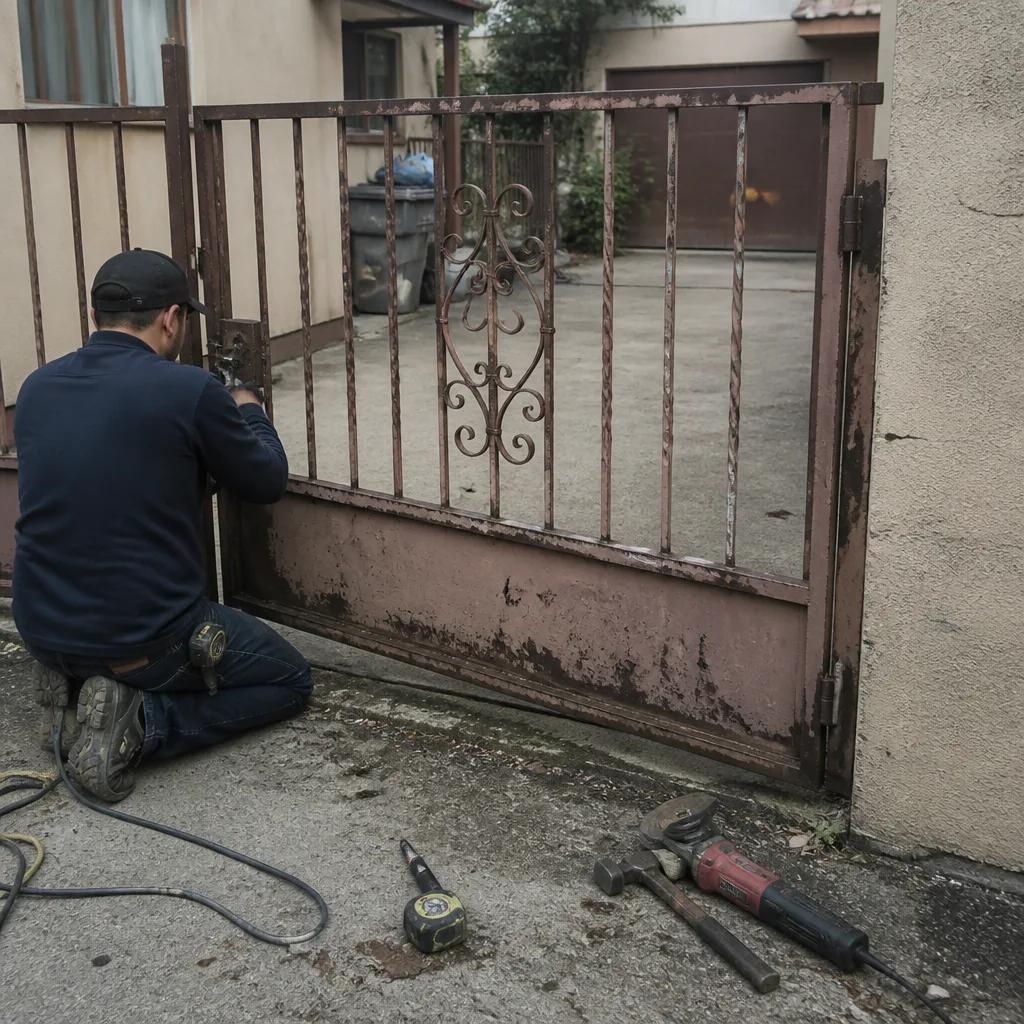 Before
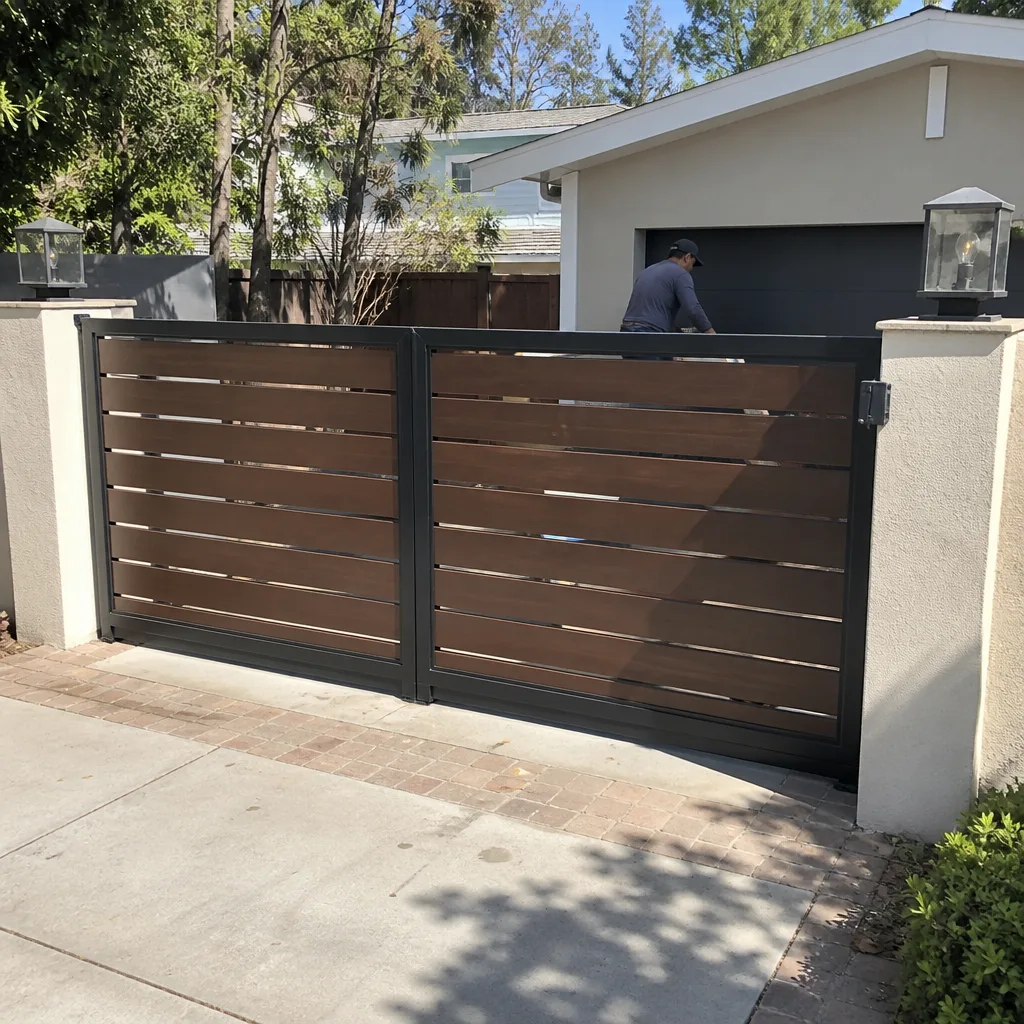 After
After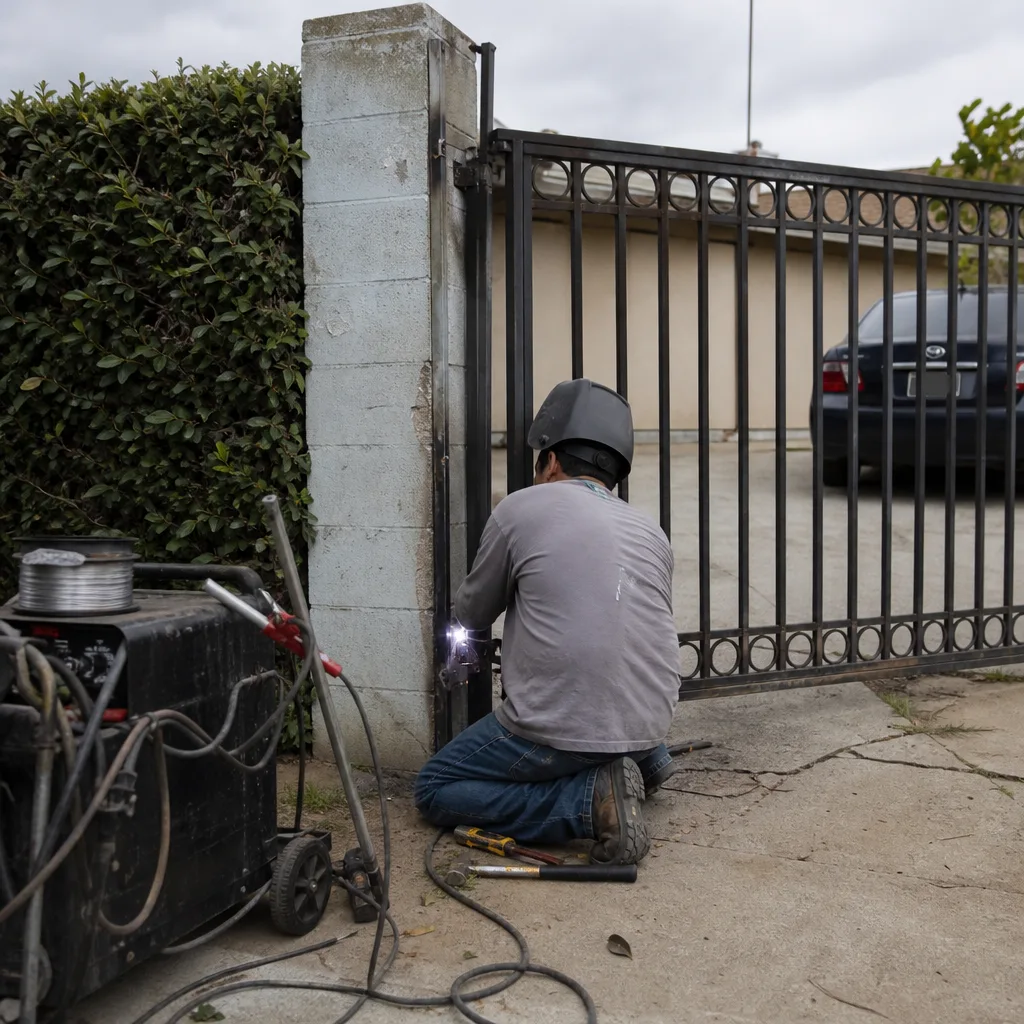 Before
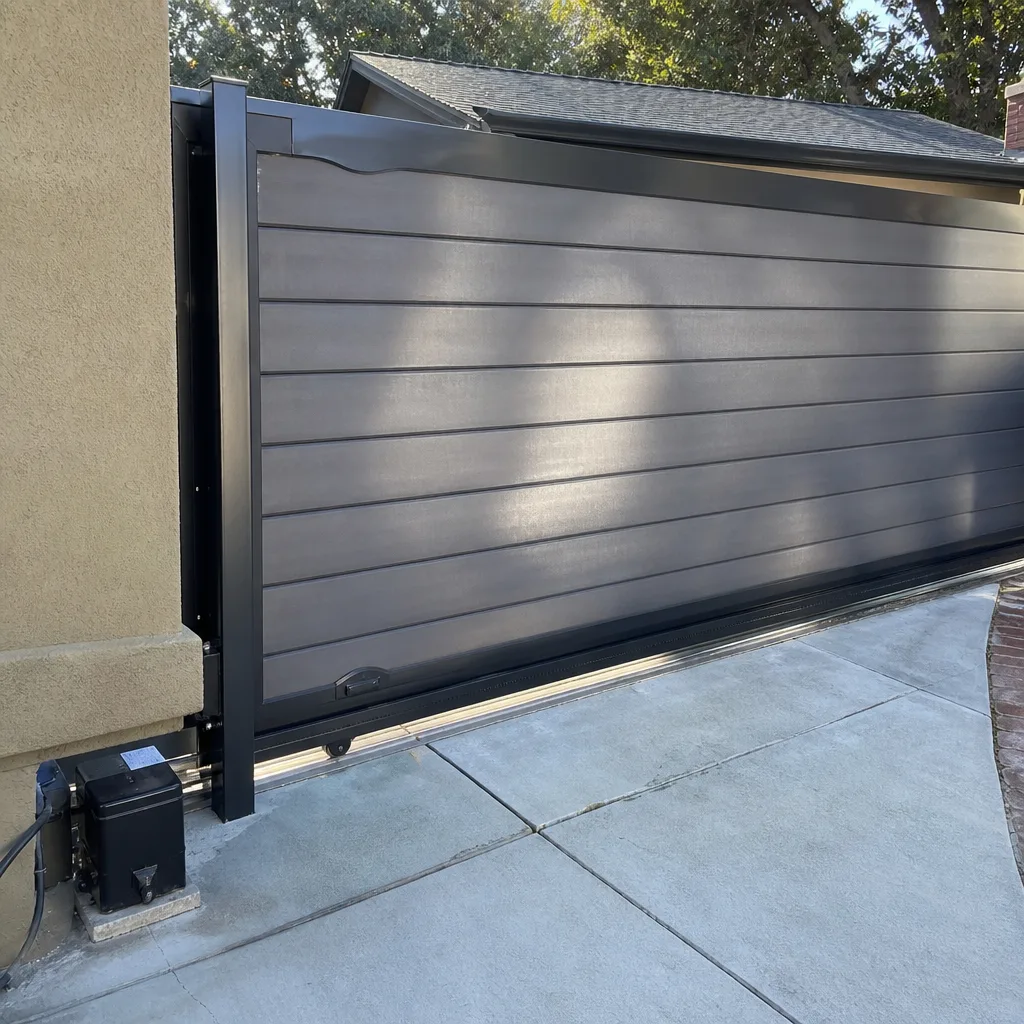 After
After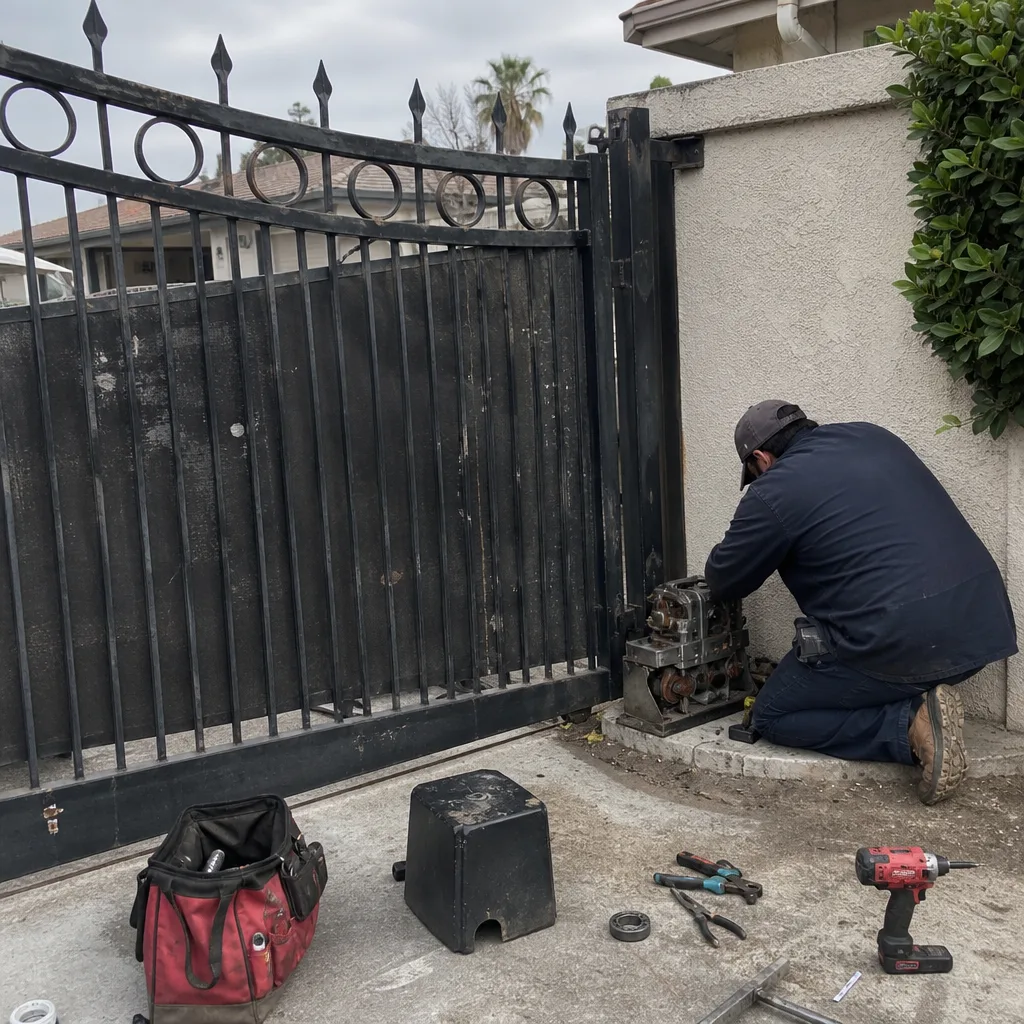 Before
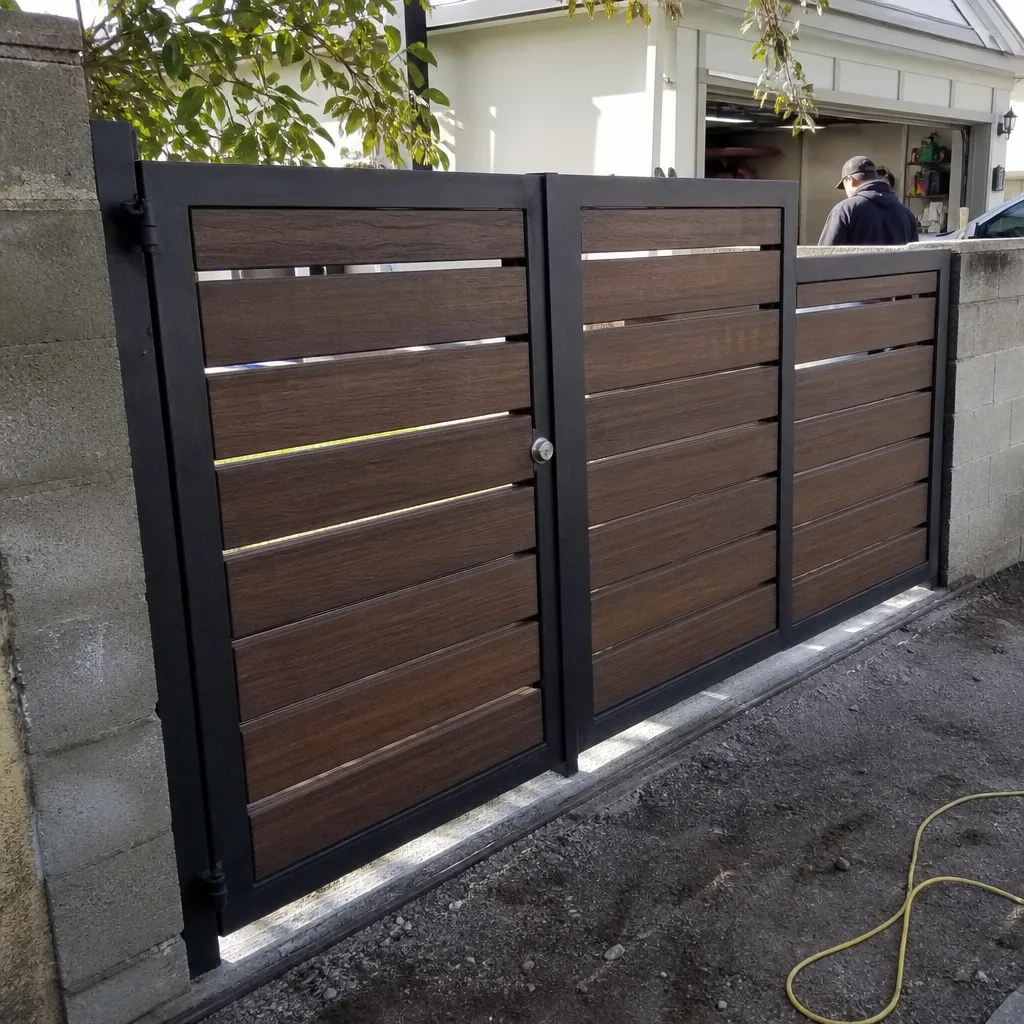 After
AfterGate Repair Cost Breakdown: The Burbank Homeowner’s Reference for 2026
Two Burbank homeowners can call about the same dead gate motor and hear the same four words: “We’ll take a look.” One walks away with a $340 repair. The other pays $1,100 for what turns out to be the same failed limit switch, same replacement part, same hour of labor. The difference is rarely competence. It’s documentation. The first homeowner got a written scope that listed the part number, the labor line, and the diagnostic findings. The second got a verbal estimate and a handshake. This Gate Repair guide exists so you can tell the difference before you sign anything, with current 2026 price ranges for gate repair in Burbank broken into the parts and labor line items that should appear on any honest written quote.
Quick Answer
Gate repair in Burbank typically costs between $180 and $1,400 in 2026, depending on the component. Common repairs like photo-eye realignment or limit switch adjustment run $150-$300, hinge and wheel replacements run $250-$600, and full motor or board replacements run $600-$1,400. Labor accounts for roughly 40-55% of most residential gate repair invoices in the Burbank market. Always ask for the price in writing before work starts, and ask what evidence you’ll receive when the job is done. For more guides & resources, see our blog.
Table of Contents
- The Ten Most Common Gate Repairs and Their Burbank Price Ranges
- Why the Same Motor Replacement Can Range from $600 to $1,400
- What a Diagnostic Fee Should Actually Include
- How to Read a Written Quote for Scope Omissions
- The Cost of Not Having a Documented Repair History
- Brand-Specific Repair Considerations: What Changes by Manufacturer
- Seven Questions to Ask Before You Approve Any Gate Repair
- Common Mistakes to Avoid
- When to Call a Professional
- Frequently Asked Questions
- The Bottom Line
BeforeAfterThe Ten Most Common Gate Repairs and Their Burbank Price Ranges
We’ve been repairing and installing gates in Burbank since 2014, and the same ten repairs account for roughly 80% of our service calls. The price ranges below reflect what we currently see across the Burbank, Toluca Lake, and Magnolia Park service area in 2026. Parts cost and labor cost are broken out separately because that separation is what lets you evaluate whether a written quote is complete. A quote that doesn’t separate parts from labor is harder to verify against any reference number you find.
1. Limit Switch Adjustment or Replacement
Parts: $30-$90. Labor: $120-$180. Total: $150-$270. The limit switch tells the motor where the gate should stop. When it drifts, the gate slams into the post or stops six inches short of fully closed. Adjustment is a 20-minute job for a technician who knows the board. Replacement is only needed if the switch housing is cracked or the internal contacts are burned. In Burbank’s summer heat, plastic switch housings on west-facing gates degrade faster than sheltered installations, so we replace more housings between July and September than the rest of the year combined.
2. Photo-Eye Misalignment or Failure
Parts: $40-$120. Labor: $80-$140. Total: $120-$260. A photo-eye (the infrared beam that stops the gate if a person, car, or trash bin crosses the safety path) can fail in two ways: the beam drifts out of alignment, or the sensor itself gets fried by moisture intrusion. Realignment is quick. A dead sensor means a new photo-eye kit, which is still one of the cheaper safety repairs on the list. If a technician quotes you a full board replacement for a photo-eye fault, ask for the diagnostic finding in writing. That’s a red flag for scope padding, and it happens enough in Burbank that we hear about it regularly during Gate Repair in Burbank callbacks from homeowners who want a second opinion.
3. Control Board Failure
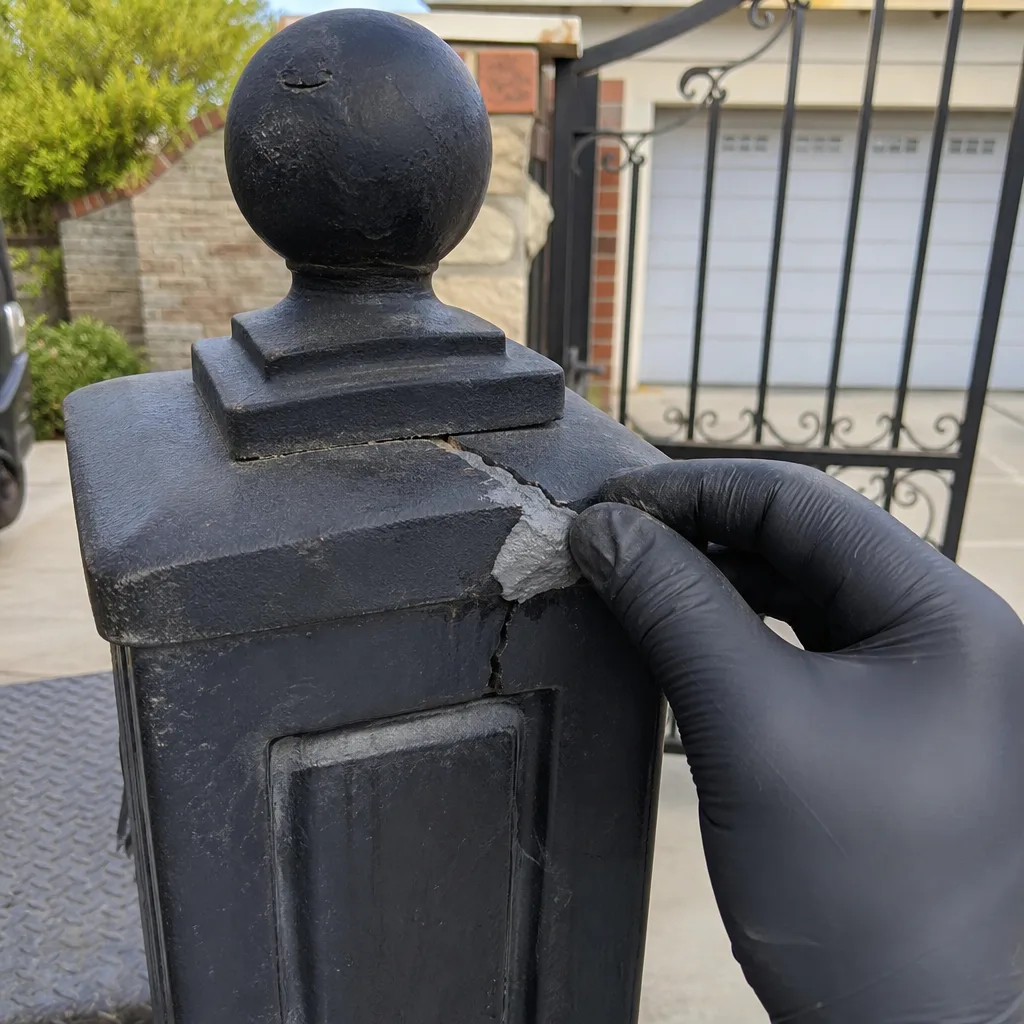
Parts: $180-$450. Labor: $150-$250. Total: $330-$700. The control board is the small computer that interprets signals from remotes, keypads, and safety sensors. When it fails, the gate either won’t respond or behaves erratically. Board pricing varies by brand more than any other single component, which is why this range is wide. A Ghost Controls board replacement runs toward the lower end. A DoorKing or Elite board sits toward the top. Labor includes board removal, new board installation, programming, and re-calibrating limit settings. A technician who skips the calibration part of the labor has saved himself ten minutes and left you with a gate that will fault within a month.
4. Gate Opener Motor Replacement
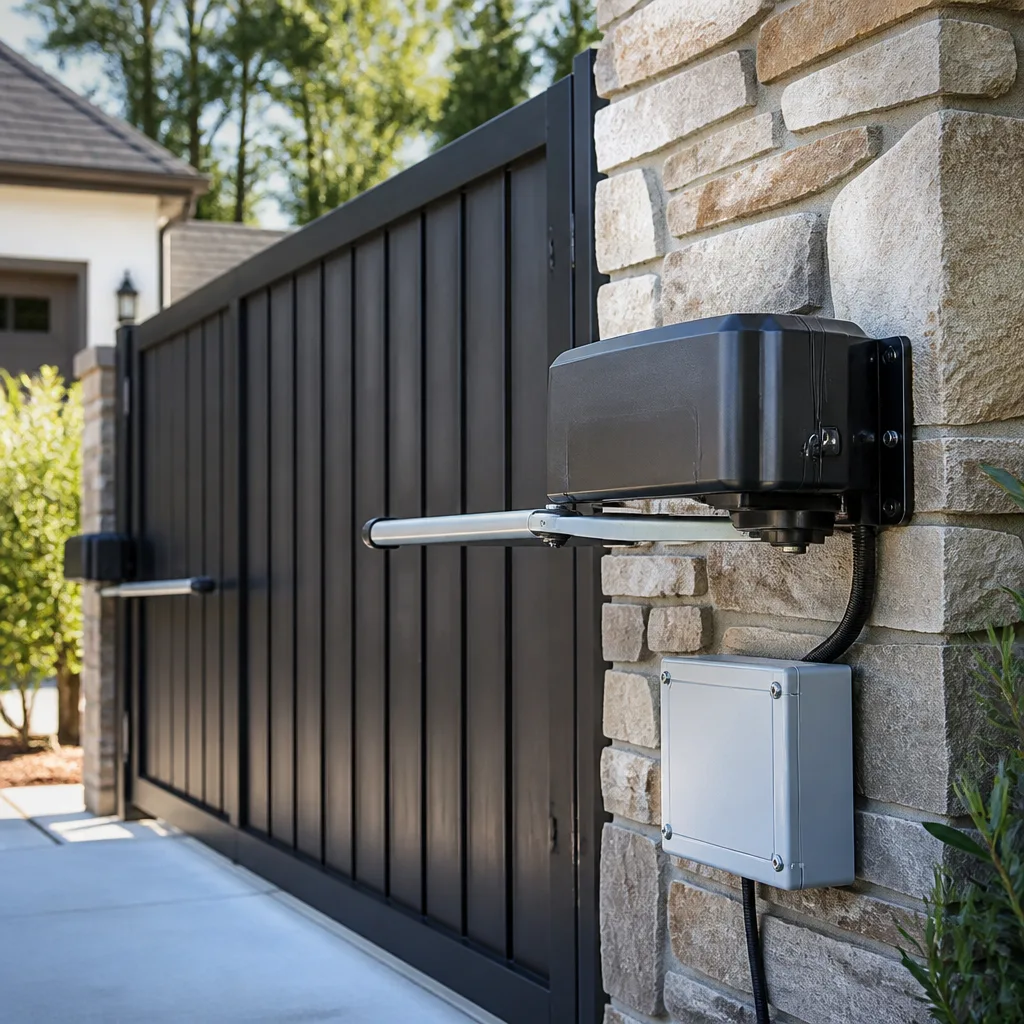
Parts: $350-$850. Labor: $250-$450. Total: $400-$1,400. The motor itself is the most expensive replaceable component on a sliding or swing gate system. Price depends on brand, voltage, and whether the arm bracket or chain assembly is reusable. You’ll find more detail on this repair in the motor replacement section below, but the headline number for Burbank is this: most residential motor replacements settle between $600 and $1,100 all in, and you should ask why if a quote lands outside that band.
5. Gate Hinge Replacement (Swing Gates)
Parts: $25-$120 per hinge. Labor: $100-$200. Total: $150-$450 depending on hinge count. Worn hinges cause sag, and sag causes the latch to bind and the motor to strain. The hinges themselves are inexpensive. The labor is modest. But the job should include a written note of the gate’s final level, because a gate that’s been sagging for a year may need post work next. We photograph the level reading during hinge replacement exactly for this reason.
6. Gate Wheel or Roller Replacement (Sliding Gates)
Parts: $40-$180 per wheel set. Labor: $140-$220. Total: $180-$400. Burbank’s dry climate means less rust than coastal communities, but sliding gates on the flat streets south of Burbank Boulevard still collect fine grit in the wheel channels. Worn rollers cause noise first, then binding, then motor failure if left unaddressed. Replacement is a straightforward parts-and-labor job, and a written quote should specify whether both top rollers and bottom wheels are included or just one set.
7. Chain or Belt Replacement
Parts: $60-$220. Labor: $120-$200. Total: $180-$420. Chains stretch over time, especially on heavier gates. Belts degrade from sun exposure and temperature cycling. The repair means removing tension, swapping the component, re-tensioning to manufacturer spec, and re-checking the limit switches afterward. This last step appears on written quotes less often than it should. If it’s missing, ask whether the final limit calibration is included. It should be.
8. Keypad or Remote Programming
Parts: $15-$90 per device. Labor: $60-$120. Total: $75-$210. Sometimes programming is all that’s needed when a keypad stops working after a power event. Sometimes the keypad itself is dead. The diagnostic tells you which. If you’re paying a trip fee plus programming time and no hardware is replaced, $75-$120 is fair for the service call. If you’re quoted $400 to “reprogram the system” and no part numbers appear, get a second opinion.
9. Safety Edge Replacement
Parts: $80-$200. Labor: $100-$160. Total: $180-$360. The safety edge is the pressure-sensitive strip along the gate’s closing edge that reverses the gate if it contacts something. It’s a critical safety device, and it degrades from repeated sun exposure and contact. Replacement involves removing the old strip, running new sensor wire if needed, and verifying the reverse function with a physical test. Any repair that touches a safety edge should end with a documented function test.
10. Noisy Operation / General Tune-Up
Parts: $20-$60 for lubricants, fasteners, shims. Labor: $100-$180. Total: $120-$240. Most noise complaints trace back to three causes: dry roller bearings, loose mounting bolts, or a chain that’s lost proper tension. A proper tune-up tightens what loosened, lubricates what’s dry, measures the gate’s travel, and records the readings on the invoice. In Burbank, we recommend a tune-up annually for gates that see daily vehicle use, because small adjustments are dramatically cheaper than the motor strain they prevent.
Key Takeaways:
- Eight of ten common repairs stay under $500 when caught early.
- Every repair above $400 should include a written parts list and labor line.
- If a quote doesn’t separate parts from labor, ask for it before proceeding.
- Preventive maintenance at $150-$250 annually prevents $600-$1,400 motor failures.
Why the Same Motor Replacement Can Range from $600 to $1,400
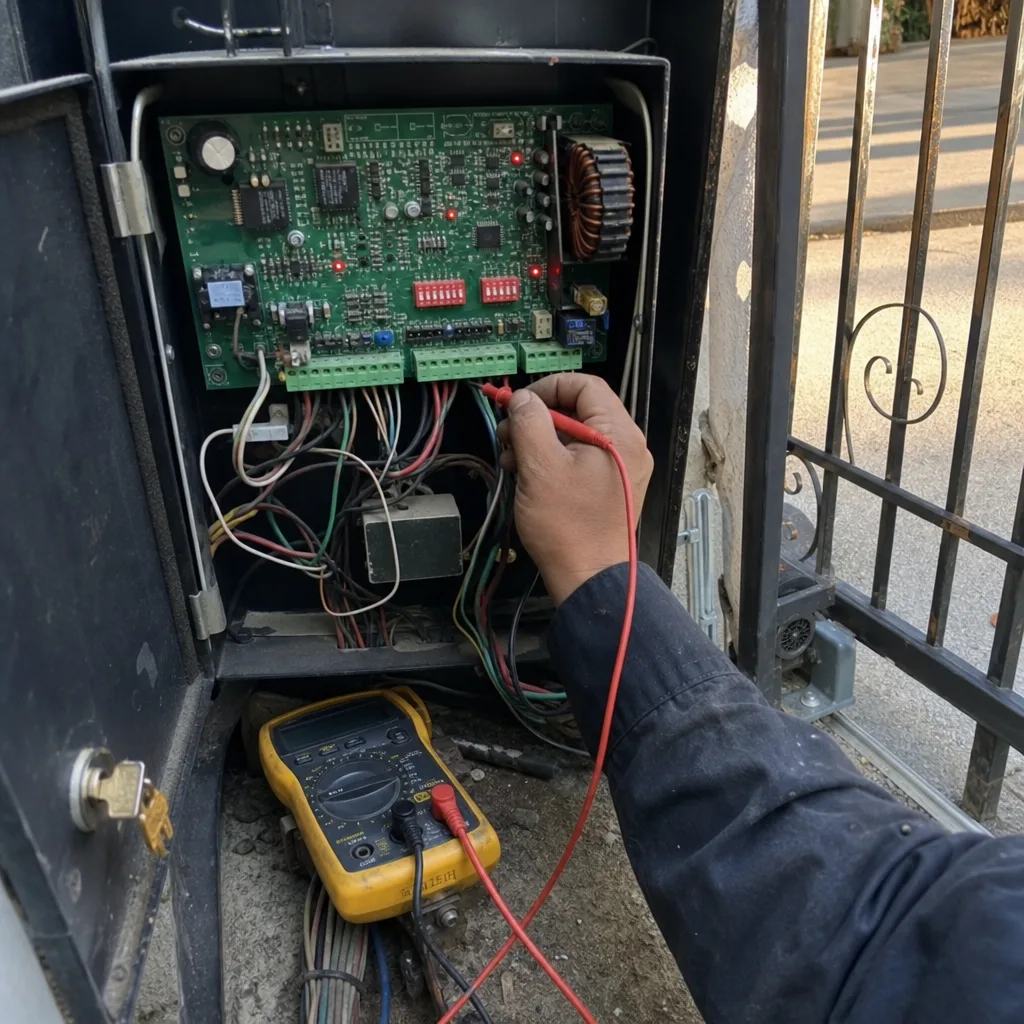
The most common question we hear during gate repair estimates is whether the price is fair. In Burbank, the answer depends on three variables that honest contractors will spell out and vague contractors won’t. A $600 quote and a $1,400 quote for “motor replacement” can both be legitimate. The spread lives in which motor, which voltage, and what the deliverable includes.
1. Brand and model. An entry-level Mighty Mule motor for a light residential swing gate might run $350 retail. A comparable DoorKing or Elite motor for a heavier sliding gate can run $700-$850 before labor. The motor is the single biggest variable in the parts column. A quote that says only “gate motor” without a make and model isn’t a quote. It’s a placeholder. You should ask for the exact motor brand, model number, and whether the price reflects an OEM part or a generic substitute. OEM parts carry their own warranty and are calibrated to the board with known limits. Generics are sometimes fine, but the choice should be yours, not the contractor’s.
2. Line voltage vs. low voltage. Some Burbank homes built before 1995 still run 120V gate systems rather than the 24V low-voltage standard on newer installations. Replacing or working around line voltage motors involves different safety considerations, different wire handling, and occasionally a step-down transformer. That adds real labor time. If your existing system is 120V and a contractor quotes low-voltage work, the number is wrong from the start. The motor replacement should match the system’s power design unless you’ve explicitly chosen a conversion.
3. What’s included in the deliverable. This is the part most homeowners miss, and it’s the one that produces the $600-vs-$1,400 spread on otherwise identical physical work. A complete motor replacement includes: removal of the old motor, installation of the new one, re-tensioning of the chain or arm, re-calibration of the limit switches, re-alignment of the photo-eyes, a function test under load, and a written record of every setting left on the board. A cheap quote skips some of those. Then the gate faults two weeks later, and the same company charges you again to “diagnose” an issue they left un-documented. We call this paying twice for the same repair, and it’s one of the primary reasons we document every job the way we do.
For more on how motor work is handled, see our Gate Motor & Opener in Burbank page. The relevant point for cost evaluation is this: a quote that can’t explain its own price spread isn’t a quote you can verify, and a price you can’t verify is one you can’t challenge after the fact.
What a Diagnostic Fee Should Actually Include
A diagnostic fee in Burbank currently runs between $59 and $129, and the range tells you surprisingly little about quality. What matters is what the fee buys. Some contractors treat the fee as a trip charge: they show up, spend 20 minutes, tell you what’s probably wrong, and leave. The fee becomes the price of their presence. That’s not a diagnostic. That’s a visit, and it leaves you with nothing you can use to compare quotes or hold anyone accountable.
A diagnostic fee should produce a written findings document. At minimum, that document includes:
- The specific component or components tested and the result of each test.
- The make and model of your gate motor and control board.
- The specific fault identified, named in trade terms, with a one-clause explanation of what that term means.
- Photographs of the failed component or the incorrect setting.
- A written repair recommendation with parts and labor separated.
- A price for the repair that is valid for a reasonable period, usually 30 days.
We routinely see diagnostic fees charged against the final repair invoice if the work proceeds, or kept as a standalone charge if it doesn’t. Both are fair as long as the fee bought you the document described above. If a contractor won’t provide written findings, won’t share photos, or says the price is only available “when we get into it,” the diagnostic fee was not a diagnostic. It was a toll to enter the driveway. In Burbank, where the average 2026 diagnostic fee is around $89, that toll adds up when you call two or three companies for opinions. Our practice is that a diagnostic produces a written record whether or not you hire us for the repair, because that record is yours either way. Under Clause 4 (Evidence on every job), every visit includes documented photos of what was found, what was adjusted, and what was replaced, at no additional charge.
How to Read a Written Quote for Scope Omissions
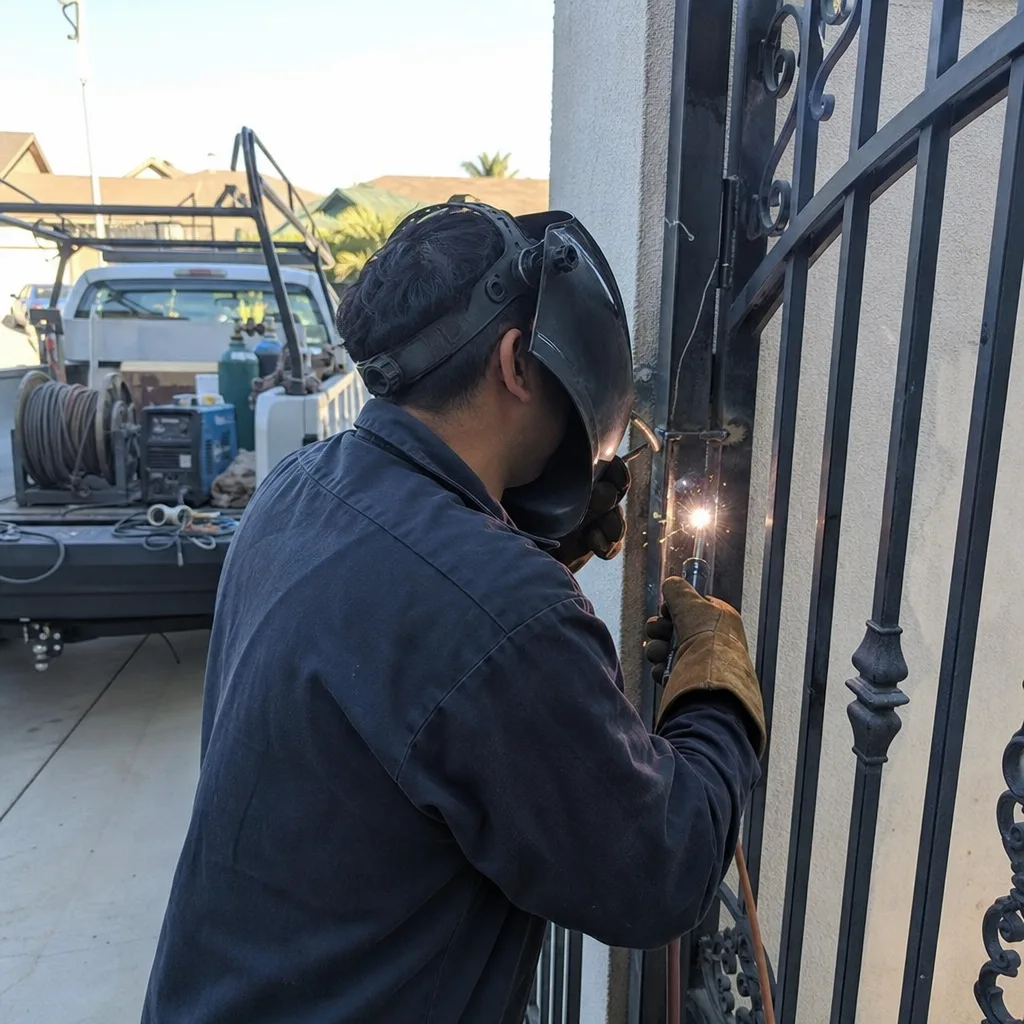
You now have a diagnostic in hand and the contractor has handed you a written quote. This is the moment most Burbank homeowners feel they’re done evaluating. They are not. A written quote can be perfectly legible and still incomplete, and the omissions are what turn a $400 repair into a $900 sequence of follow-ups. Here’s how to read the document for what’s missing.
Every complete gate repair quote includes these line items:
- Parts line with quantity and part number. “Gate hinge replacement” is not enough. “2x 4-inch adjustable steel hinges (DOOR-KING 4200-123)” is a line you can verify.
- Labor line with a defined scope. “Labor: replace hinges, level gate, lubricate all pivot points, test motor travel.”
- Calibration or commissioning line, if the repair involves a motor, board, or limit switch. If a quote covers the part but not the re-calibration, assume you’ll be charged for calibration later.
- Disposal line, if parts are being removed. “Old motor disposal included” or a separate $25-$50 disposal line. If neither appears, ask.
- Warranty statement with a duration. A parts-and-labor warranty period on the repair itself. It doesn’t need to be a year, but it needs to be stated.
- Payment terms. “50% deposit, balance on completion” or “Full payment on completion.” If the quote doesn’t say when payment is due, the contractor gets to decide later, and you get to be surprised.
- No calibration line on a motor or board job. This is the most common omission we fix for Burbank homeowners. The motor gets replaced, but the limits were never re-set, and the gate slams or stops short. The follow-up service call is always billable.
- No mention of the safety system. If the repair touches anything in the gate path (motor, wheels, hinges), the photo-eyes and safety edge should be tested as part of the job. Written quotes that omit this are quietly excluding a step that takes ten minutes and matters enormously.
- Vague parts language. “New motor” without make and model. “Hinges” without style or count. “Board” without brand. These are placeholder quotes written to be unverifiable. If they can’t name the part, they don’t have the part, and the price will shift when they do.
- No documented final condition. A quote that describes the repair but not the evidence of completion leaves you unable to prove what was done. Ask what you’ll receive when the technician leaves: photos, settings record, part serials. If the answer is “receipt,” that’s not enough documentation to protect you on a mechanical system that will need future service.
- Do you put the price in writing before work starts? If the answer is “we’ll see how it goes once we get into it,” you’re being quoted a range, not a price. A real gate repair quote is a flat number with parts and labor separated.
- What brand is the replacement part? The answer should be a manufacturer name and a model number, not “whatever fits.”
- Does the quote include re-calibration of the limit switches and re-alignment of the safety sensors? On any motor, board, chain, or hinge repair, these steps should be explicit.
- What documentation will I receive when the job is done? A receipt is not documentation for a mechanical system. Ask about photos, settings records, and part numbers left in your file.
- What’s the warranty on the repair, and what does it cover? The answer should include a duration and a scope. “Parts and labor for X months” is what you want.
- Is the diagnostic fee credited toward the repair? This is industry standard but not universal. Ask before you book the diagnostic.
- Will you provide a written record of what was found before quoting the repair? If the answer is no, what you’re really being offered is a verbal estimate plus a promise. Verbal estimates are free, but so are their consequences.
- Approving work based on a verbal price. Without a written quote, the number is whatever the contractor remembers. A written price before work starts is Haven Standard Clause 1, and it protects both sides from the memory problem.
- Skipping the diagnostic document. If you pay a diagnostic fee and leave with nothing in writing, you paid for a visit, not findings. Ask for the photos and the written fault description before the technician drives away.
- Accepting a quote that doesn’t separate parts from labor. A combined number hides what you’re actually paying for. Parts should have a line. Labor should have a line. Total should be a sum, not a statement of vibes.
- Using price as the only comparison metric. Two Burbank companies can quote $800 for a motor replacement where one includes re-calibration, photo-eye alignment, and documentation, and the other includes the motor. The first is cheaper at twice the price, because the second generates a $200 follow-up call within a month.
- Ignoring the documentation ask until after the repair fails. A repair that works perfectly the day it’s done always looks like it doesn’t need a paper trail. The paper trail isn’t for that day. It’s for the next technician, on a different day, when the thing that was adjusted has drifted again.
- Choosing a contractor who can’t name your gate’s brand. If they can’t identify the motor or board make, they haven’t worked on enough gates. If they guess, the quote is a placeholder. Brand literacy is a basic competency check.
- Assuming you need a full replacement when a repair was never quoted. Some gates in Burbank get replaced because no contractor offered a credible repair path. Before you agree to a full installation quote, ask whether the existing system was excluded for a specific reason or just excluded from the conversation.
Specific omissions that should make you pause:
The Gate Installation in Burbank process we run applies the same scrutiny to new work, but the evaluation logic is identical whether the job is a $200 hinge or a $1,400 motor: if it’s not in writing, it doesn’t exist. That’s Haven Standard Clause 1: have it in writing. No exceptions, every job, every price, before anyone picks up a tool.
The Cost of Not Having a Documented Repair History
Gates outlive contractors. That’s the uncomfortable structural fact most homeowners learn the hard way. A gate installed in 2007 is now on its third or fourth technician, none of whom left behind a wiring diagram, a photo log, or a record of what the limit switch was set to. When the next technician arrives, they start from zero. And starting from zero is billable.
A technician working with a documented repair history can usually diagnose a problem in 20-40 minutes. The record tells them which board is installed, how the photo-eyes are wired, what the motor’s travel settings were, and which parts were replaced and when. They open the file, check the fault code, and go straight to the failed component.
A technician working on a gate with no history typically spends an hour or more reverse-engineering the system. They trace the wiring. They identify the board. They test every sensor because they can’t rule anything out. That hour isn’t free. At Burbank labor rates of roughly $100-$150 per hour for gate work in 2026, the absence of a service record adds $75-$150 to a typical diagnostic, and sometimes more on complex multi-sensor installations or gates that have been modified by several previous contractors.
Worse than the labor cost is the error cost. A technician who can’t see that the limit switch was previously adjusted 12 degrees past travel may re-adjust it correctly, then spend 40 minutes chasing a secondary issue that doesn’t exist, and bill you for all of it. Or they may assume a motor is failing when the real problem is a tension setting left wrong by a previous repair. We know this because we’ve taken over gates that came with no records at all, and we have reverse-engineered wiring on gates that looked like they’d been worked on by four different companies with four different philosophies. It’s common enough in Burbank, where houses turn over steadily and gate documentation rarely transfers with the property, that we built our entire documentation practice around solving it.
The fix is simple to describe and hard to enforce from the homeowner’s side: demand the record. Every genuine repair should end with a document that tells the next technician what happened. Since 2014, every job at Vance Gate Repair Burbank has left a photographed record of what was found, what was set, and what was installed. That record belongs to the homeowner, and it’s the single most valuable thing we hand over after the gate is closed and tested. It’s not a sales tool. It’s a future labor cost reducer, and it’s the difference between a gate that gets diagnosed in 20 minutes and one that gets investigated for two hours at your expense.
Brand-Specific Repair Considerations: What Changes by Manufacturer
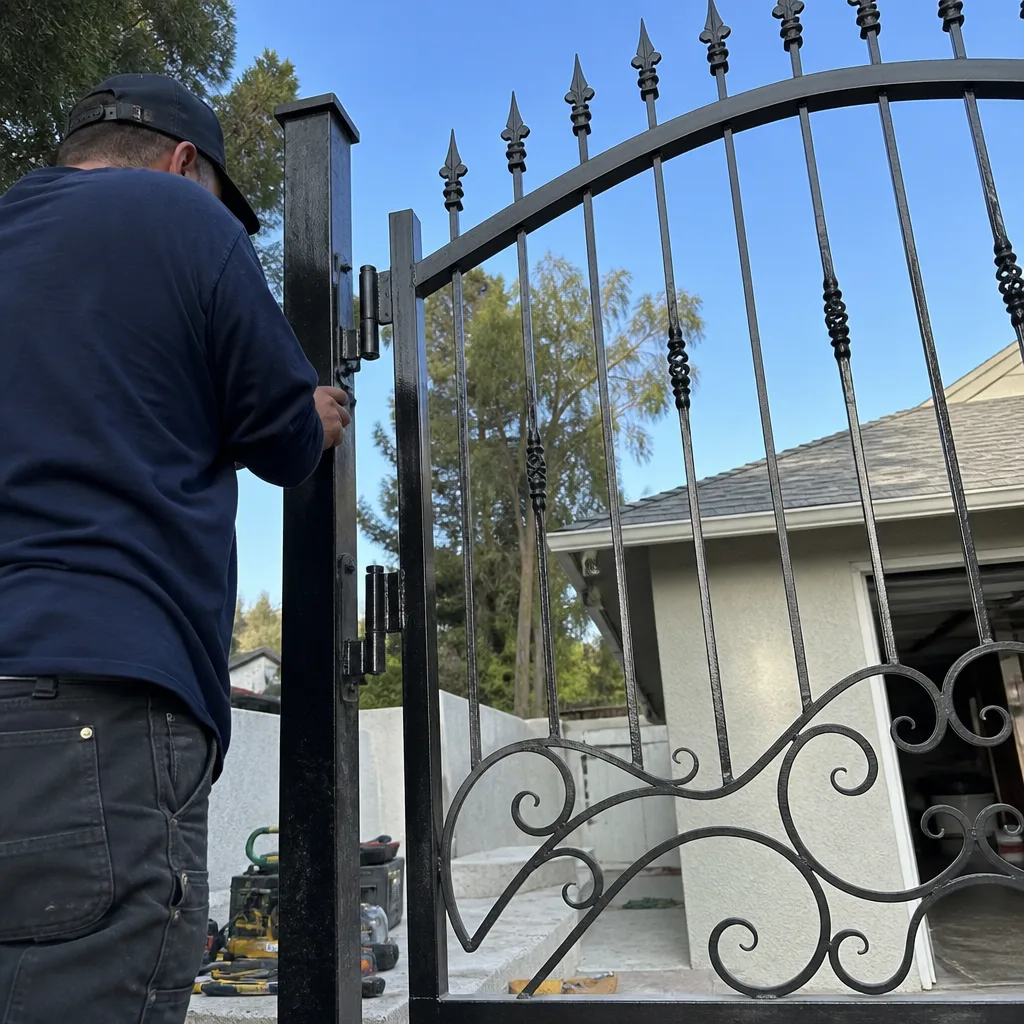
The motor and board on your gate carry a manufacturer name, and that name changes the repair economics more than most Burbank homeowners expect. It also changes which technicians are actually qualified to work on your system. The industry has consolidated around a handful of manufacturers, and while the physical principles are the same across brands, the boards are not interchangeable, the settings are not standardized, and the failure patterns are not identical.
Ghost Controls systems are common on newer residential swing gates and are generally repairable at the board or arm level, with parts pricing on the accessible end of the spectrum. A failed Ghost Controls board is usually $180-$300 in parts, making it one of the more economical board replacements when it fails.
DoorKing systems appear frequently on Burbank properties with sliding driveway gates, especially homes built in the 1990s and 2000s. DoorKing boards are robust but expensive, and the motors are heavy enough that replacement labor runs higher. A DoorKing motor replacement is frequently the difference between a $700 job and a $1,100 job, and the quote should reflect the known brand before anyone orders parts.
Elite and Mighty Mule occupy different ends of the spectrum. Elite is commercial-leaning, often found on longer or heavier gates, with parts pricing that reflects that. Mighty Mule skews lighter residential and remains one of the more DIY-friendly brands, which means we sometimes see gates where a Mighty Mule arm was installed by the previous homeowner and the wiring is not documented. That missing documentation is its own cost factor, as described above.
The practical takeaway for a Burbank homeowner evaluating any gate repair is this: ask whether the technician has worked on your specific brand before. A technician who mostly services one manufacturer may be entirely competent on the mechanical side but slower on board programming for a different brand, and that slowness is labor you pay for. The nine major gate-automation brands we service (LiftMaster, FAAC, BFT, Linear, Viking, Ghost Controls, DoorKing, Elite, and Mighty Mule) means we can work on whatever motor is already on the property rather than steering customers toward replacement simply because it’s more convenient for our parts department.
Seven Questions to Ask Before You Approve Any Gate Repair
These are the questions we’d want a family member to ask before signing. They aren’t gotchas. They’re the questions whose answers reveal whether a contractor intends to document their work or wing it.
Common Mistakes to Avoid
When to Call a Professional
Any repair that involves the gate’s motor, control board, chain tension, or safety sensors is professional territory. These systems carry enough stored energy to injure, and a gate that fails mid-cycle can damage a vehicle or hurt someone standing in the path. High-tension springs and cables on large gates should never be adjusted by a homeowner; the stored energy can release suddenly. If the gate is making metallic grinding noises, if it reverses on its own without obstruction, if it opens but won’t close, or if the safety sensors stop triggering the reverse function, call a licensed professional. Vance Gate Repair Burbank offers free estimates in Burbank, and a written price before any work begins. Call (213) 577-1120 to schedule a diagnostic.
Frequently Asked Questions
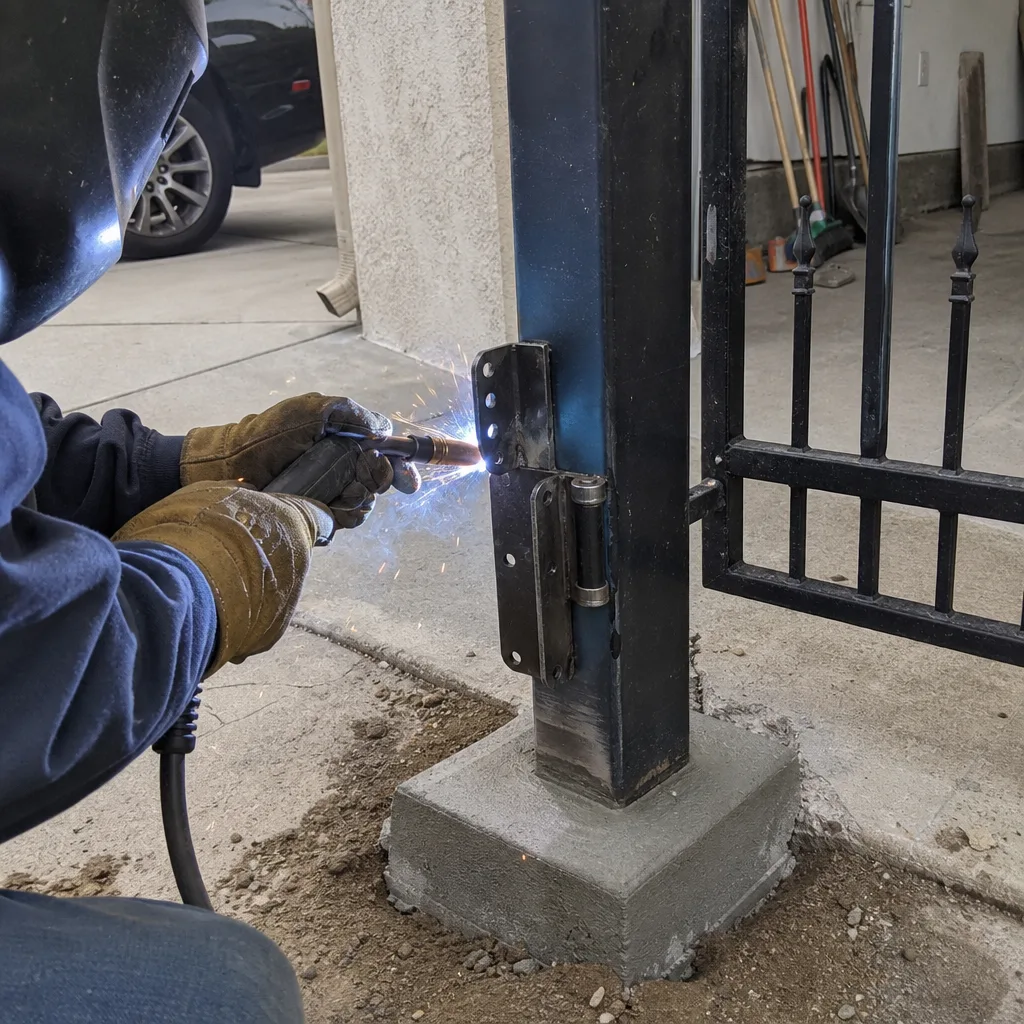
Most Burbank gate repairs cost between $150 and $1,400 in 2026, with common jobs like photo-eye alignment, limit switch adjustment, and hinge replacement staying under $500. Motor and board replacements are the exceptions that push invoices past $600. The fastest way to get an exact number is to request a written quote with parts and labor separated, which removes the mystery from the final invoice. Call (213) 577-1120 for a free estimate from Vance Gate Repair Burbank.
Motor replacement is the most expensive single-component repair on a typical residential gate system, running $400-$1,400 depending on brand, voltage, and installation complexity. The second most expensive is usually a control board, at $300-$700. Both should be quoted with parts and labor separated and a written calibration line included, because the calibration omission is the most common source of hidden follow-up costs on these repairs.
No. A failed control board does not require motor replacement unless the motor has also failed independently. A diagnostic that tests each component should tell you which part is dead. Some contractors prefer to replace motor-plus-board as a unit because it’s easier, but a reputable diagnostic will isolate the failed component so you’re not paying for hardware you don’t need. We service boards and motors separately across all nine major gate automation brands.
A complete gate repair quote includes a specific parts line with brand and model, a labor line with defined scope, a calibration or commissioning line for any motor or board work, a warranty statement with duration, a disposal note for removed parts, and payment terms. If any of those elements are missing, the quote is incomplete and the final invoice may exceed the written number. Ask for the missing line items before work begins.
For most repairs, yes. Common repairs like limit switch adjustment, photo-eye realignment, hinge replacement, and keypad programming can typically be completed in a single visit. Motor and board replacements may require a same-day diagnosis and a parts order if the specific brand isn’t already on the truck. A live person answers the phone 24/7 at Vance Gate Repair Burbank, so call (213) 577-1120 to find out current same-day availability.
Because an undocumented gate costs more to service later. A technician working from a documented record can diagnose most faults in 20-40 minutes. Without that record, reverse-engineering the system takes an hour or more, which adds $75-$150 to the diagnostic at current Burbank labor rates. Every job at Vance Gate Repair Burbank includes a photographed record of what was found, what was set, and what was installed, so the next diagnosis starts from facts rather than guesswork.
The Bottom Line
Gate repair costs in Burbank are predictable when the quote separates parts from labor and names the parts by brand and model. The ten most common repairs stay under $500; motor and board replacements climb to $600-$1,400 when the brand and the calibration work are actually included. The homeowners who overpay are usually not being cheated by a criminal, they’re being quietly billed by an omission: a missing calibration line, a missing safety test, a missing record of what was found. The defense is simple and available to everyone: demand the written price before work starts, and the written record when it ends. See our Gate Repair Maintenance Checklist for Burbank Homeowners for a step-by-step review of what that record should include. That’s the entire philosophy behind The Haven Standard, and it’s how we’ve operated every job since Adrian Vance started the company in 2014.
Written by Adrian Vance, Owner at Vance Gate Repair Burbank, serving Burbank since 2014.