
Last updated September 20, 2026
Free on-site gate assessment - hinges, posts, and your LiftMaster or Nice gate operator checked before anything is quoted
The assessment is free and the quote is the invoice.

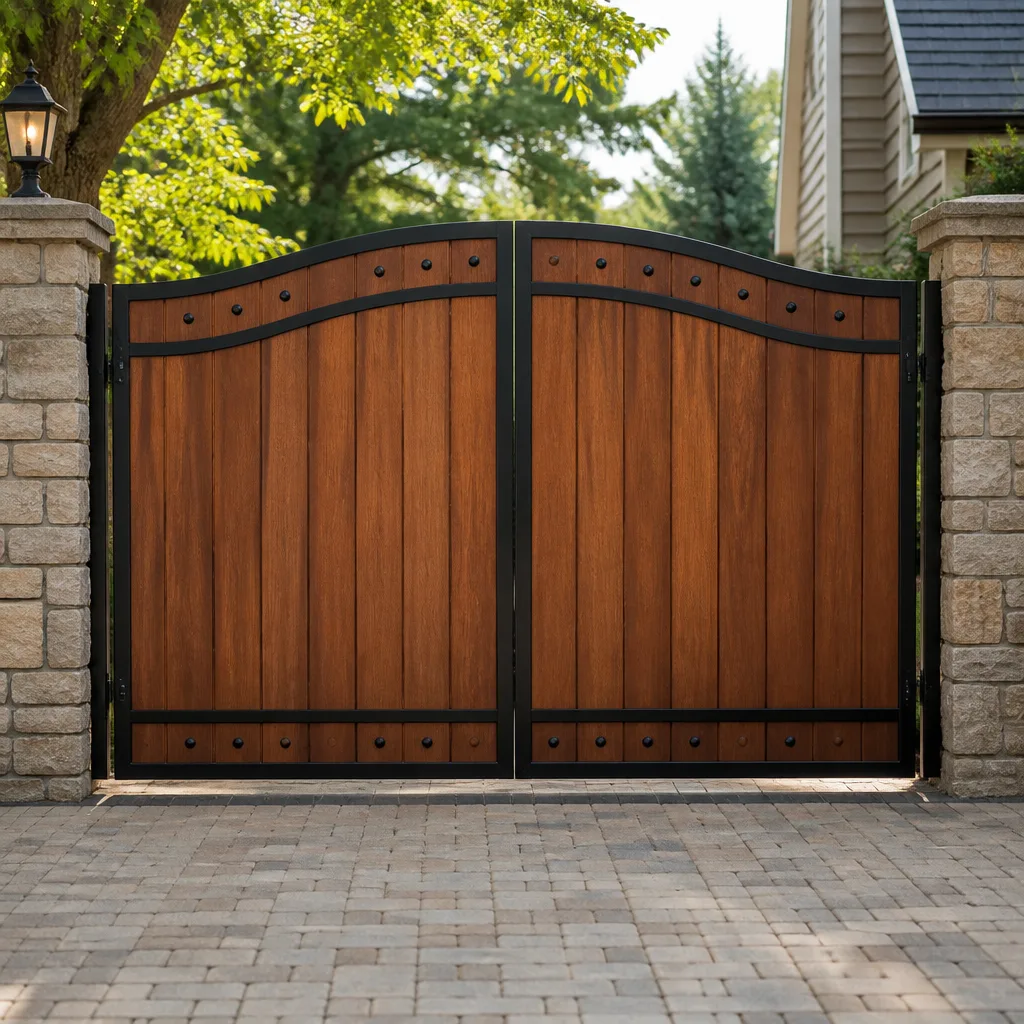

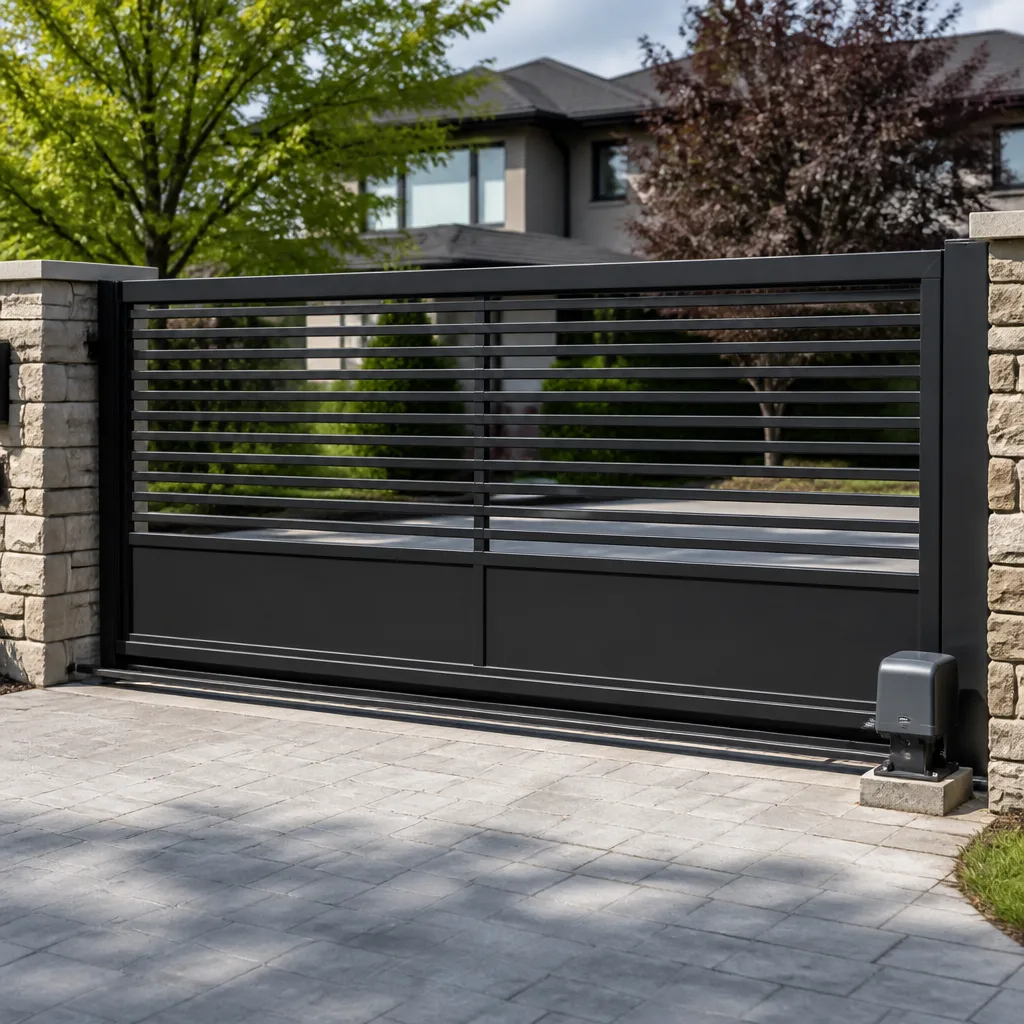
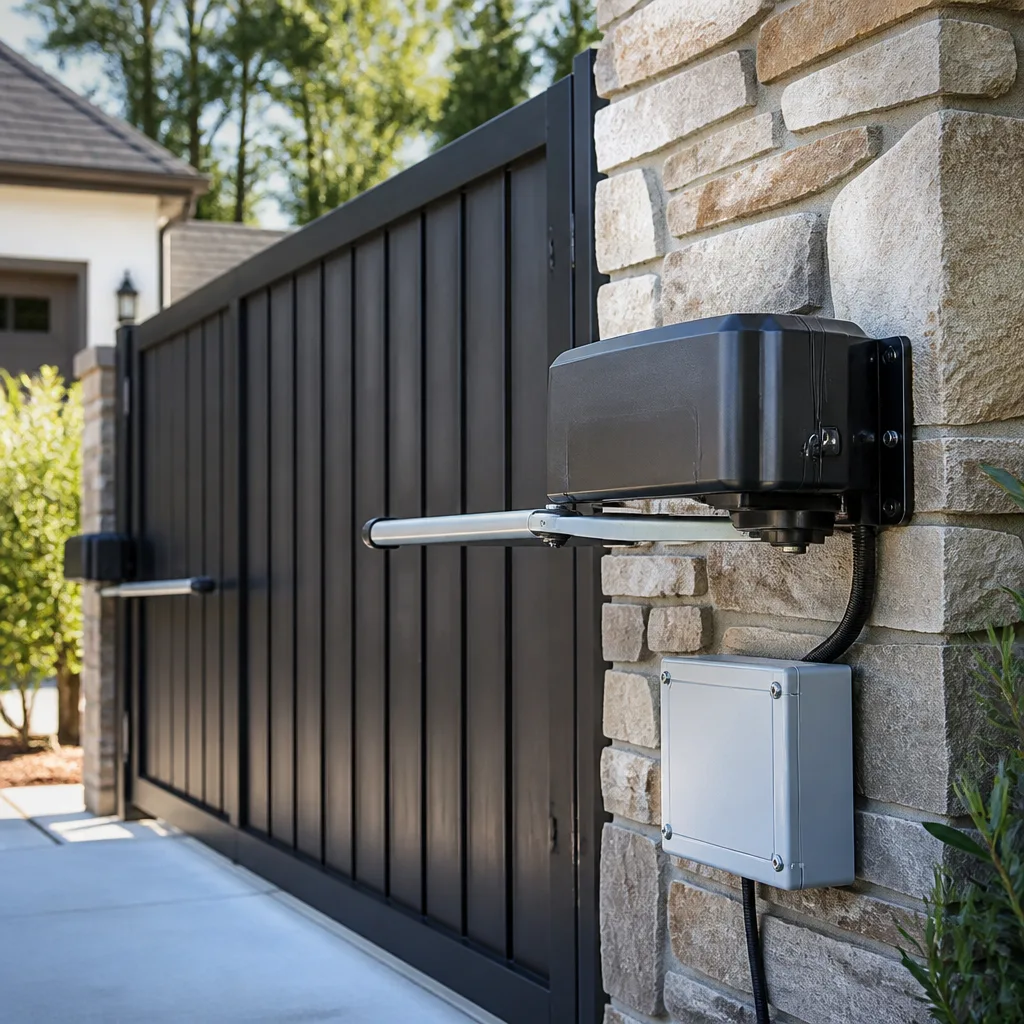
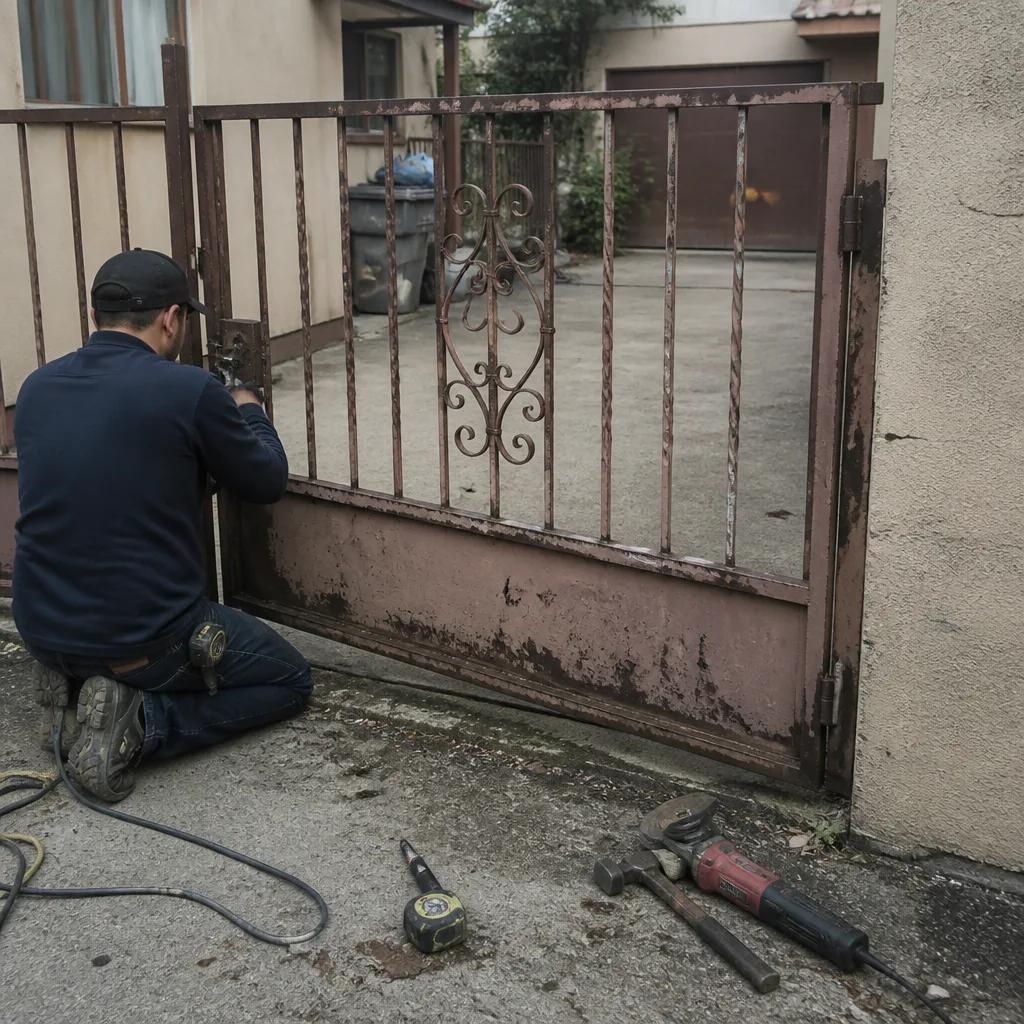 Before
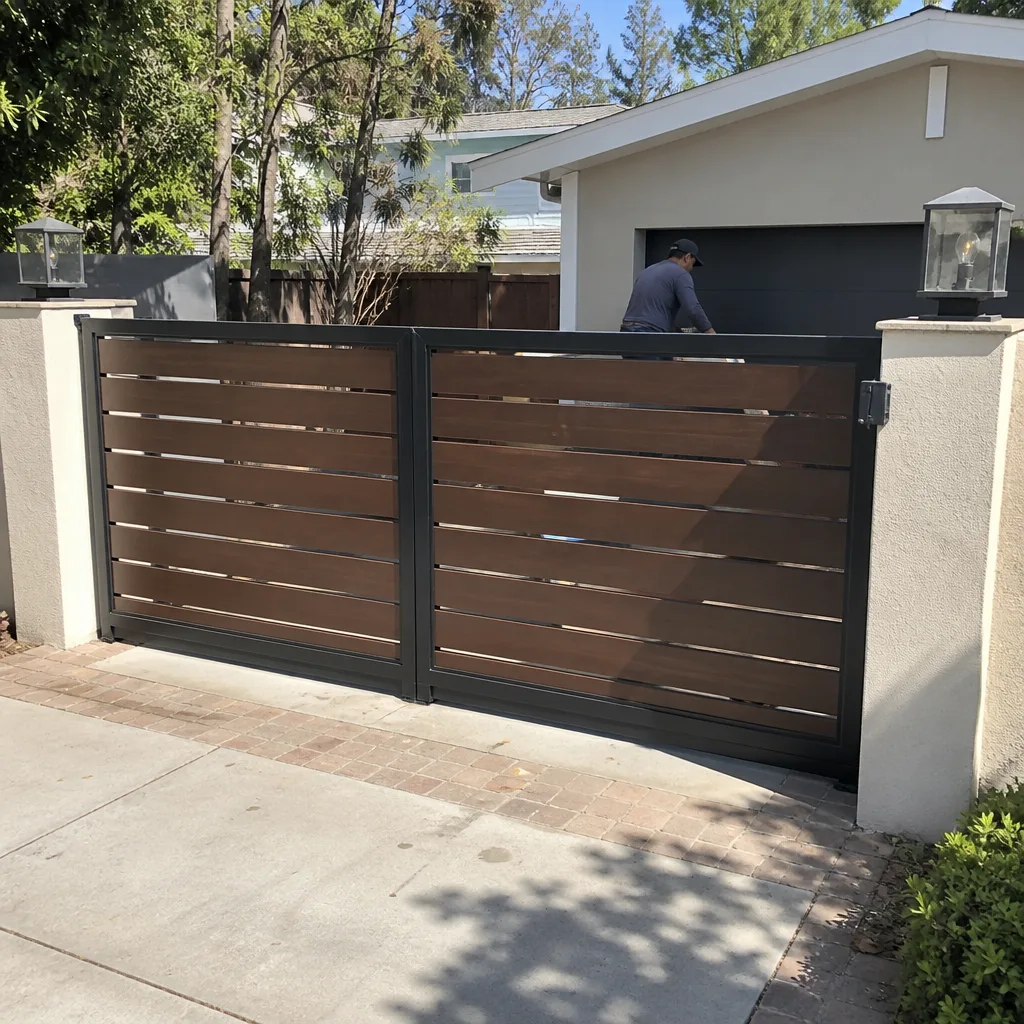 After
After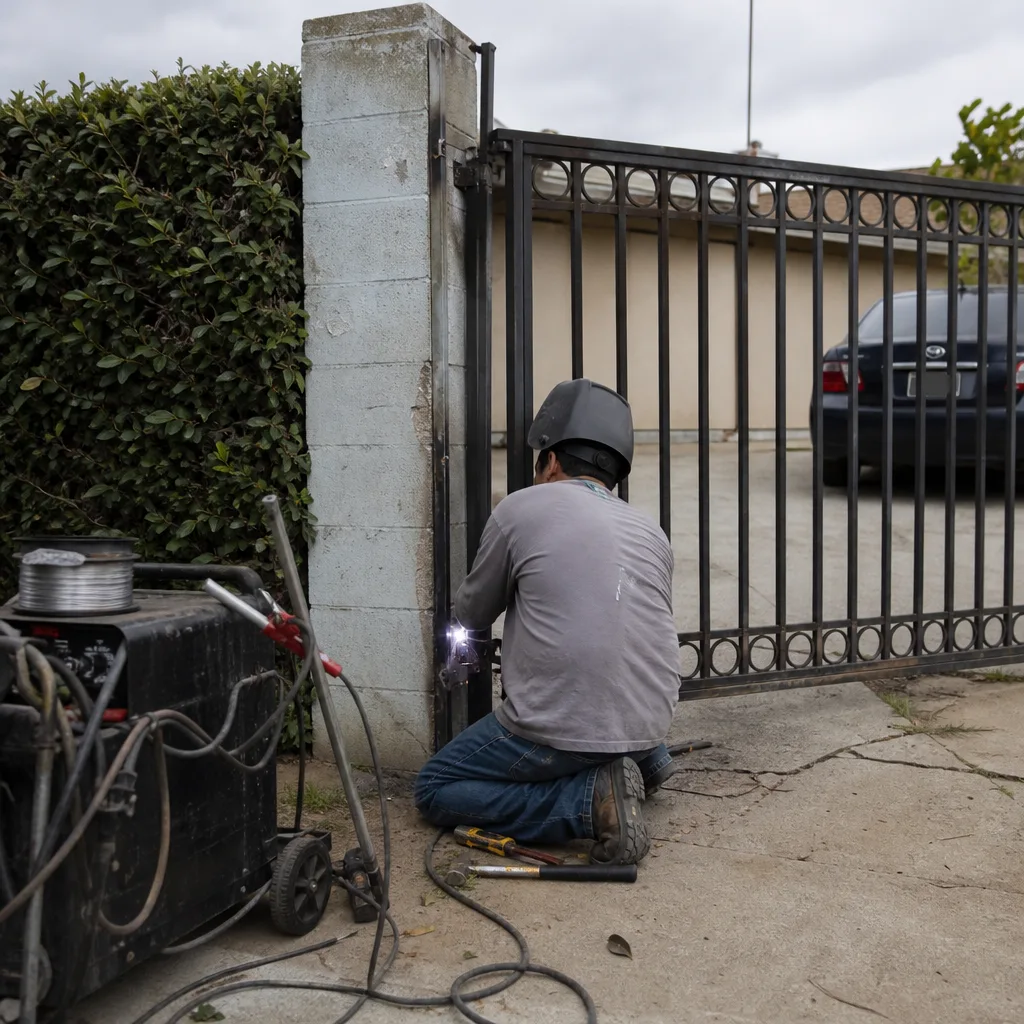 Before
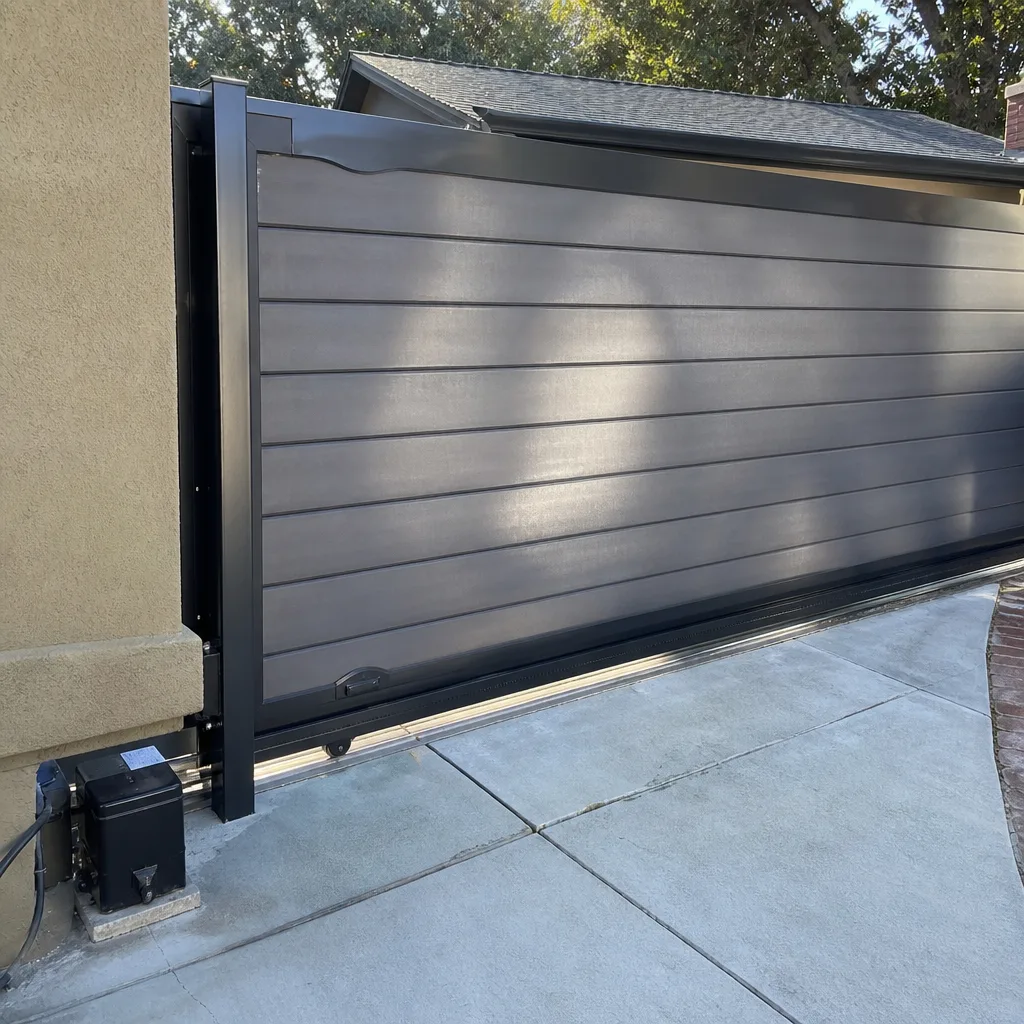 After
After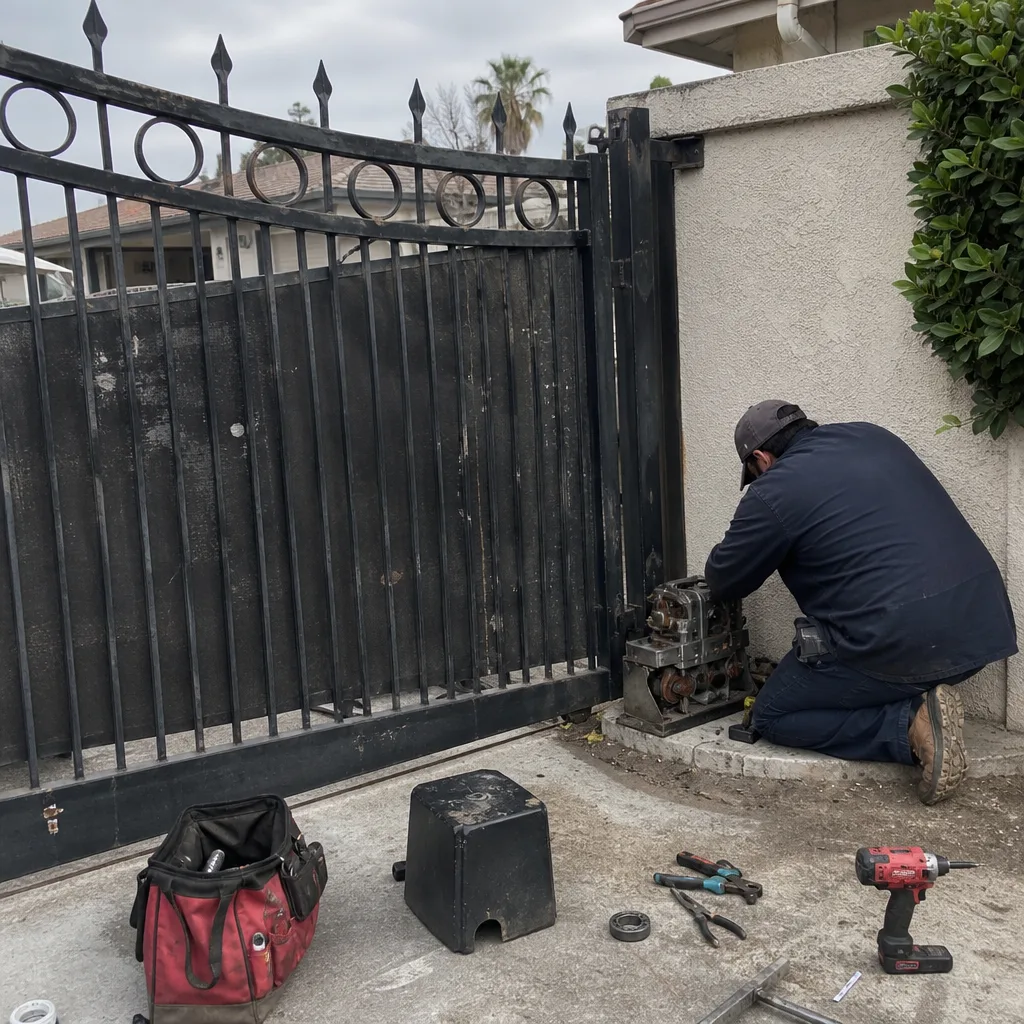 Before
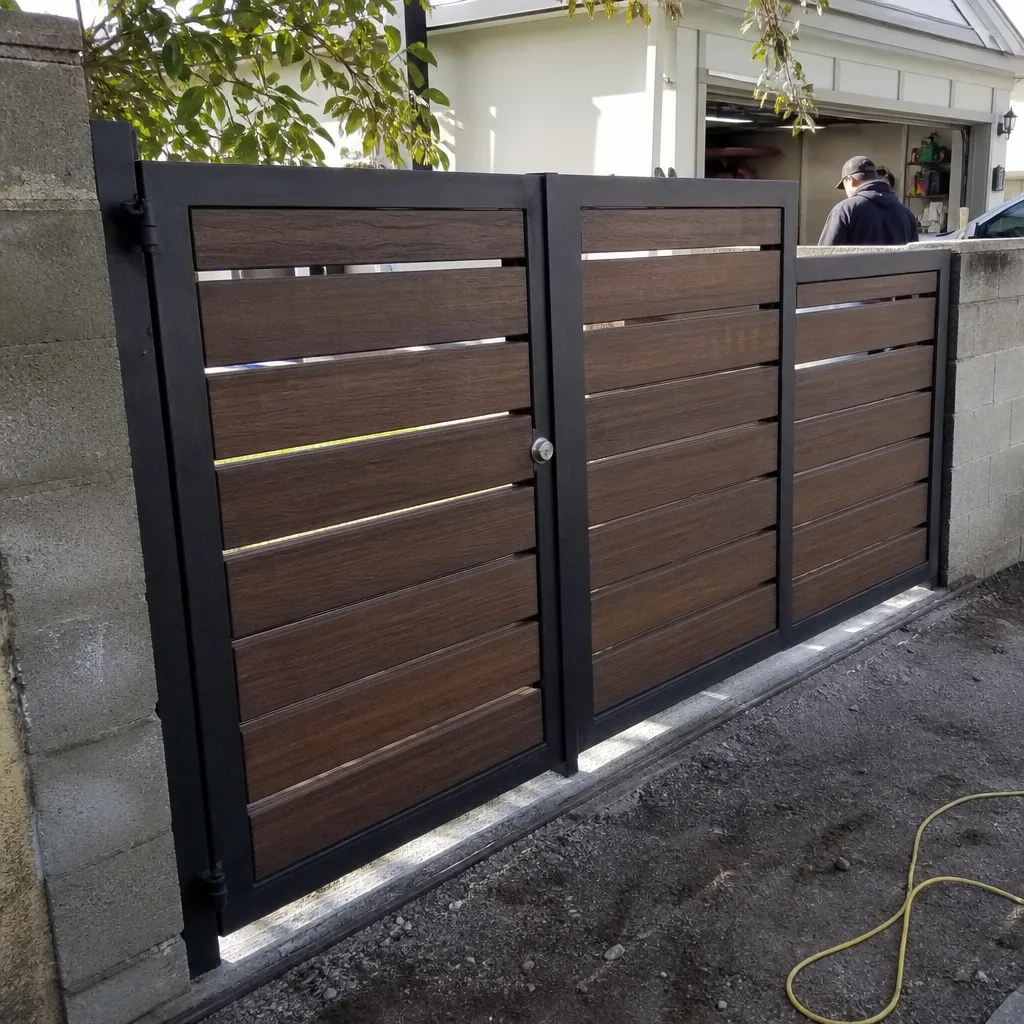 After
AfterGate Repair Permits, Codes & Inspections in CA: What You Need to Know
An unpermitted gate motor installation in California doesn’t just risk a fine. It can surface during a title search when you sell the house and become a negotiating point that costs more to resolve than the permit would have in the first place. Buyers, lenders, and inspectors all flag automated gates because they carry entrapment risk, and without a permit record, nobody can verify the installation met UL 325 safety standards. This guide draws the exact line between gate work that requires a permit and work that doesn’t, explains what an inspector actually checks, and tells you what to do if you already own a property in Burbank with an undocumented gate operator. For more details, see our Gate Repair services. You’ll learn the thresholds, the codes, and the paperwork trail that protects you.
Quick Answer
Simple mechanical gate repairs in California, like replacing hinges, welding a cracked post, or adjusting a sagging leaf, do not require a permit in Burbank. For Gate Repair Warning Signs: A Burbank Homeowner’s Reference Guide, see our dedicated resource. Automated gate operators (motors) and any new gate installation that includes an operator typically do require a building permit because the operator falls under electrical and entrapment-protection code. The permit triggers an inspection where the inspector verifies UL 325 compliance, proper entrapment sensors, and correct wiring before the work is signed off.
Table of Contents
- Where the Permit Line Actually Is: Repair vs. Operator vs. New Install
- UL 325: The Safety Standard Behind the Permit
- Burbank Municipal Code and California Building Code Thresholds
- HOA CC&Rs in Burbank: What Governs When They Conflict
- What a Gate Permit Inspection Actually Checks
- You Already Have an Unpermitted Installation: Here’s the Playbook
- What Gate Permits and Remediation Cost in Burbank
- Common Mistakes to Avoid
- When to Call a Professional
- Frequently Asked Questions
- The Bottom Line
BeforeAfterWhere the Permit Line Actually Is: Repair vs. Operator vs. New Install
Most of the gate work we see in Burbank falls into one of three buckets, and only two of them touch the permit counter.
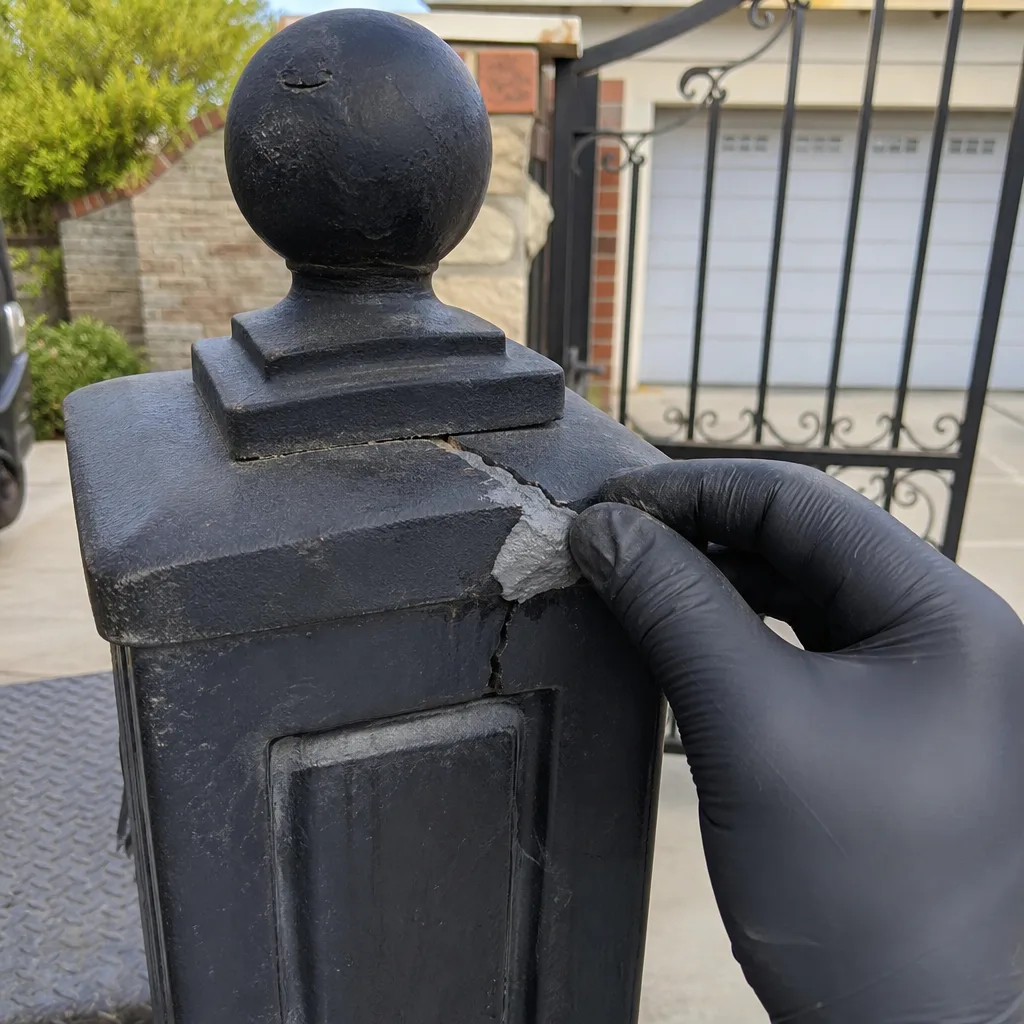
Bucket one: mechanical repair. No permit required. This covers hinge replacement, wheel replacement, post straightening, welding a cracked frame, replacing a picket, adjusting a drop rod, or rebuilding a latch. The gate leaf itself is a structure, not an electrical installation. Burbank’s building department does not require a permit for repairing or replacing parts on an existing non-automated gate. We do this kind of work every week without a permit, and the city’s position is consistent: if nothing is electrified and nothing is new, it’s maintenance.
Bucket two: operator installation or replacement. Permit required. The moment a motor, actuator, or control board enters the picture, the work falls under the California Electrical Code and the California Building Code because the operator is a powered device with entrapment risk. This applies whether you’re adding automation to a manual gate or replacing a dead operator on an existing automated gate. The permit is typically classified as a low-voltage electrical permit, and it triggers one or two inspections.
Bucket three: new gate installation. Permit required when the gate is automated, and often required even when it isn’t. A new automated gate in Burbank needs both a building permit for the gate structure (footings, posts, leaf dimensions) and an electrical permit for the operator, power run, and safety devices. A new manual gate over a certain height and width may also require a building permit if it’s anchored to new footings, but a straightforward swap of a manual gate on existing posts usually clears without one. The distinguishing question we tell homeowners to ask: “Is the city going to see something new that didn’t exist before?” New concrete, new electrical, new operator: permit. Same posts, same gate, same motion: no permit.
For a deeper look at what a repair actually involves on the ground, see Gate Repair in Burbank. And when the gate itself is being replaced rather than fixed, Gate Installation in Burbank walks through the full scope.
UL 325: The Safety Standard Behind the Permit
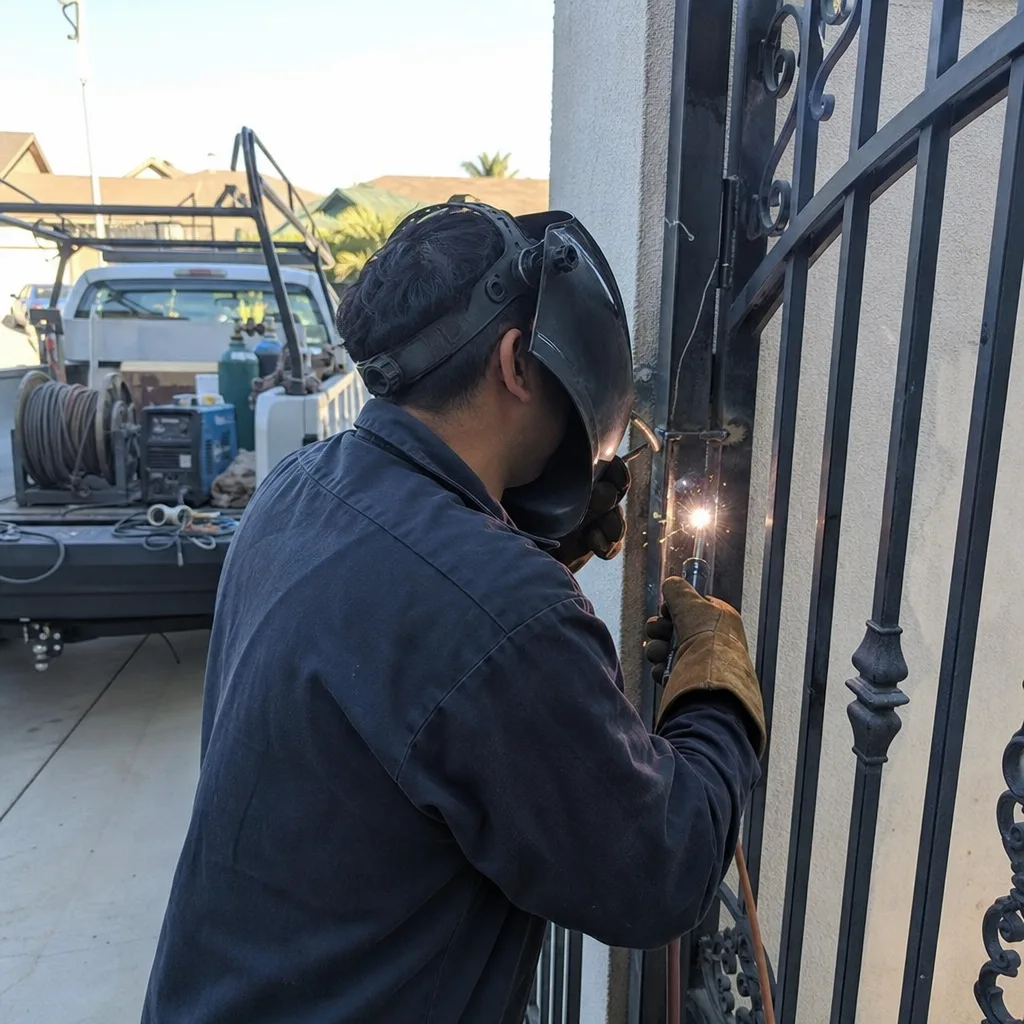
UL 325 is the reason the permit exists. It’s the Underwriters Laboratories standard for automated gate operators, and it governs everything that can hurt a person or a car: entrapment protection, force limits, warning signage, and fail-safe behavior. A permit inspection for a gate operator is, at its core, a UL 325 compliance check.
The standard requires every automated gate to have at least two independent forms of entrapment protection. In practice, that usually means a photo-eye (the infrared beam that stops the gate if something crosses the path) paired with a contact edge sensor or an obstruction-detection circuit in the operator itself. A properly calibrated operator senses resistance and reverses before the force becomes dangerous. The inspector will test this by placing an object in the gate path and watching whether the operator reverses.
We regularly find non-compliant installations in Burbank where a previous homeowner or handyman mounted an operator without any photo-eye at all. The motor runs, the gate opens, and nothing would stop it from closing on a child, a dog, or a car. Those installations are not just unpermitted; they’re genuinely unsafe. The fix usually means adding a photo-eye and a contact edge, repositioning the operator arm, and running the setup through a force test.
UL 325 also sets the signage requirements. Every automated gate needs a visible warning sign mounted on or near the gate, readable from both sides, with the standard hazard wording. Inspectors in Burbank check for the sign. It’s the cheapest line item in the whole permit and one of the most commonly missed.
We service nine operator brands, including Viking, DoorKing, Elite, and Ghost Controls, and we’ve seen UL 325 compliance vary by brand and installer. Some operators ship with force-sensing built in; others rely entirely on external photo-eyes and edge sensors. The permit inspection doesn’t care which brand you have. It cares that the installed system meets the standard. More on motor specifics at Gate Motor & Opener in Burbank.
Burbank Municipal Code and California Building Code Thresholds
California is a statewide building code state. The California Building Code (CBC) and California Electrical Code (CEC) set the baseline, and Burbank adopts those codes with local amendments. That means the permit threshold in Burbank matches the CBC definition of an automated gate operator as an electrical installation requiring a permit, with a few local specifics worth knowing.
Burbank’s building department treats a gate operator as a low-voltage electrical installation when it runs on a Class 2 power supply (typically 24 volts DC at the operator head, fed by a step-down transformer). That classification keeps the permit simple and the fee modest compared to a full 120-volt electrical permit. However, if the power run from the house to the gate requires a new dedicated circuit or conduit that enters the house panel, that portion is inspected as a standard electrical installation under the CEC, with its own rough-in and final inspection.
The CBC also governs gate dimensions. Gates over 7 feet in height or 16 feet in width, or gates with a heavy leaf weight, may be treated as structures with wind-load and footing requirements. Burbank’s local amendment adds seismic anchoring requirements for gates serving driveways on slopes, which is relevant in hillside neighborhoods like the areas off Glenoaks and above Kenneth Road. If your gate sits on a slope and the retaining wall or footing predates the current code cycle, the inspector may ask for verification that the post footings can carry the operator’s load.
What does not trigger a permit in Burbank: replacing a photo-eye, swapping a remote receiver, reprogramming a keypad, adjusting a limit switch, or replacing a control board in the same enclosure. Those are repair actions on a permitted system. We tell homeowners to keep the original permit record when they buy a house with an automated gate because a repair on a permitted system stays repair, while a repair on an unpermitted system can become a code correction discussion.
HOA CC&Rs in Burbank: What Governs When They Conflict
Burbank has a high concentration of HOAs relative to its size, particularly in newer subdivisions and gated communities. If you live in one, your CC&Rs (Covenants, Conditions, and Restrictions) layer on top of municipal code, and the two do not always point in the same direction.
Here is the hierarchy that applies: municipal code sets the floor for safety and permitting. An HOA cannot waive a city permit, cannot exempt you from UL 325 compliance, and cannot tell you to bypass an inspection. An HOA can, however, set a higher bar for aesthetics, gate style, paint color, operator brand, noise limits, and the approval process you must follow before a permit application is even filed.
Where conflict arises, the stricter requirement governs because the two authorities regulate different things. Example: your HOA may require a specific swing gate style and a specific operator brand, but the city permit will still require the entrapment sensors and the inspection. You comply with both. The HOA approval does not substitute for the city permit, and the city permit does not override the HOA’s design restrictions.
In practice, we’ve seen Burbank homeowners start a gate project, get city approval, and then stall at the HOA architectural review because the board meets monthly and requires a formal submittal. The sequence that works is: HOA approval first, then city permit application. The HOA typically takes days to weeks. The city permit for a gate operator in Burbank is often issued over the counter or within a few business days when the scope is straightforward.
If your HOA and the city both require documentation, keep both. The HOA’s approval letter goes in your sale disclosure file alongside the signed permit card. When you sell, the buyer’s title company will ask about the gate. Having both pieces of paper turns a potential negotiation point into a non-issue.
What a Gate Permit Inspection Actually Checks
Here’s what happens when a Burbank inspector arrives for a gate operator final inspection. The inspection is practical and focused, and most of it happens in front of you at the gate itself.
- Entrapment protection. The inspector will test the photo-eye and any contact edge sensors by blocking or interrupting the signal while the gate is in motion. The gate must stop and reverse within the force and time limits set by UL 325.
- Force test. The inspector will use a force gauge or a manual obstruction test to verify the operator reverses before applying dangerous pressure. This is the test that fails installations where the previous owner skipped the operator manual and set the force dial to maximum.
- Warning signage. The inspector will confirm the UL 325 warning sign is mounted on or adjacent to the gate, visible from both approach directions.
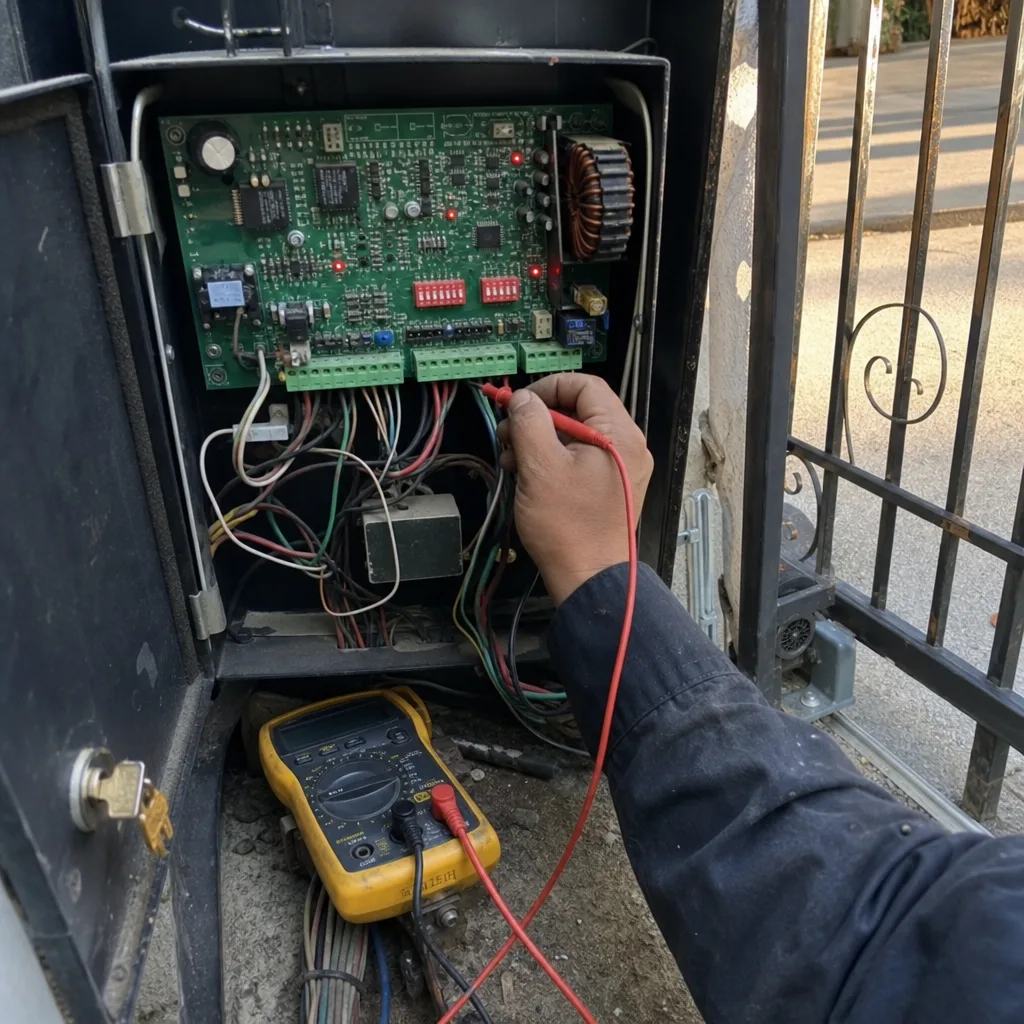
- Electrical connections. The power run, junction box, conduit, and operator wiring are checked for code compliance. Exposed romex, unprotected splices, and missing weatherproof covers are the usual citations.
- Operator mounting and gate travel. The inspector watches a full open and close cycle, checks the limit settings, and confirms the gate does not travel past its designed stop points.
- Footing and post condition (new installs). For new gate installations, the inspector verifies that the posts are set to plan depth, the footings match the approved drawings, and any slope-related anchoring is in place.
A gate operator inspection typically takes 20 to 30 minutes. If the inspector finds a problem, you get a correction list, and the re-inspection happens after the fixes are made. The most common corrections we see are missing signage, photo-eye misalignment, and force settings that are too aggressive.
You Already Have an Unpermitted Installation: Here’s the Playbook
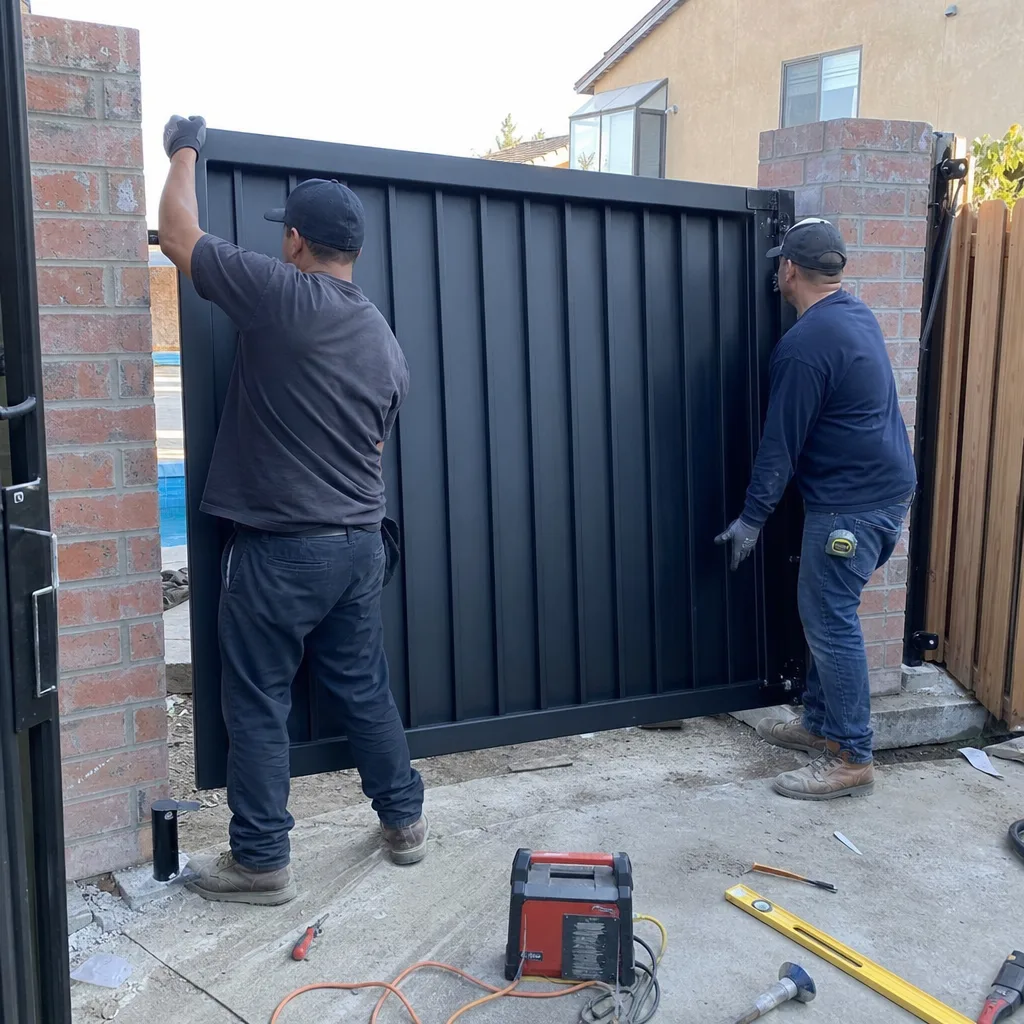
We get this call regularly in Burbank: a homeowner bought a house, the gate works, and then the title company or a buyer’s inspector flags the operator as an apparent unpermitted installation. If you’re hiring help, read How to Hire a Gate Repair Contractor in Burbank: A Step-by-Step Guide first. The homeowner did nothing wrong. The previous owner or a previous contractor skipped the permit. Now it’s your problem.
Here is the remediation playbook, in order. Step one is always documentation. Photograph the operator, the model and serial number, the photo-eyes, the wiring connections, the power supply, and the gate’s full open and closed positions. This documentation gives you a baseline and gives any technician a clear starting point. We leave exactly this kind of photo record on every visit under our Haven Standard, and it’s the single most useful thing for correcting old work.
Step two is a code compliance assessment. A qualified gate technician evaluates whether the existing installation meets UL 325 and CEC requirements. Many older installations fail on entrapment protection alone. The operator itself may be fine; the missing photo-eye or absent warning sign is what makes it non-compliant.
Step three is remediation. The usual fixes are adding entrapment sensors, correcting wiring, mounting signage, and adjusting force settings. Step four is the retrospective permit. In Burbank, you can apply for a permit to legalize existing work after the fact. The city calls this a “permit to legalize” or a retroactive permit, and it involves an inspection of the current installation. If the work passes, the city records the permit, and the unpermitted status is resolved. If it doesn’t pass, the corrections happen first, then the inspector signs off.
Remediation for a typical undocumented residential gate operator in Burbank, including adding a photo-eye, an edge sensor, signage, and the retroactive permit, usually runs between $600 and $1,500 depending on the operator age and the wiring condition. That’s the full cost to clear the title flag and make the gate safe. It is less than the typical closing-table credit a buyer demands for an unpermitted gate, which we’ve seen run $2,000 to $5,000.
What Gate Permits and Remediation Cost in Burbank
Here is the honest price picture for Burbank gate permit work as of the current code cycle. These are ranges we see in the field, not promises, because every property has different wiring conditions and access.
- Gate operator permit fee (Burbank): $150 to $350 for a low-voltage electrical permit on a residential gate, depending on the valuation declared.
- Retroactive permit fee: typically double the standard fee, so $300 to $700, reflecting the city’s penalty structure for after-the-fact permits.
- Photo-eye and edge sensor addition: $250 to $500 installed, including the sensors, mounting hardware, and wiring tie-in.
- UL 325 warning signage: $25 to $60, and you can legally install it yourself if you follow the placement requirements.
- Full operator replacement on a permitted system with permit pulled: $900 to $2,200 depending on brand (a Ghost Controls residential kit runs lower; a DoorKing or Viking unit runs higher) and whether the existing wiring and mounting are reusable.
- New automated gate with permit, footing work, operator, and inspection: $4,000 to $12,000 in Burbank, driven by gate size, slope anchoring, operator choice, and whether the power run requires new conduit from the house.
Every number here is a written price before any work starts when you work with us. That’s the entire point of our upfront pricing: you know the number before you decide, and the permit is a line item on your written scope, not a surprise at the end.
Costs vary with the operator brand, and we don’t steer toward replacement when repair is the right call. If your existing motor is a DoorKing, a Viking, an Elite, or a Ghost Controls, we service all of them. See Gate Motor & Opener in Burbank for brand-specific service details.
Common Mistakes to Avoid
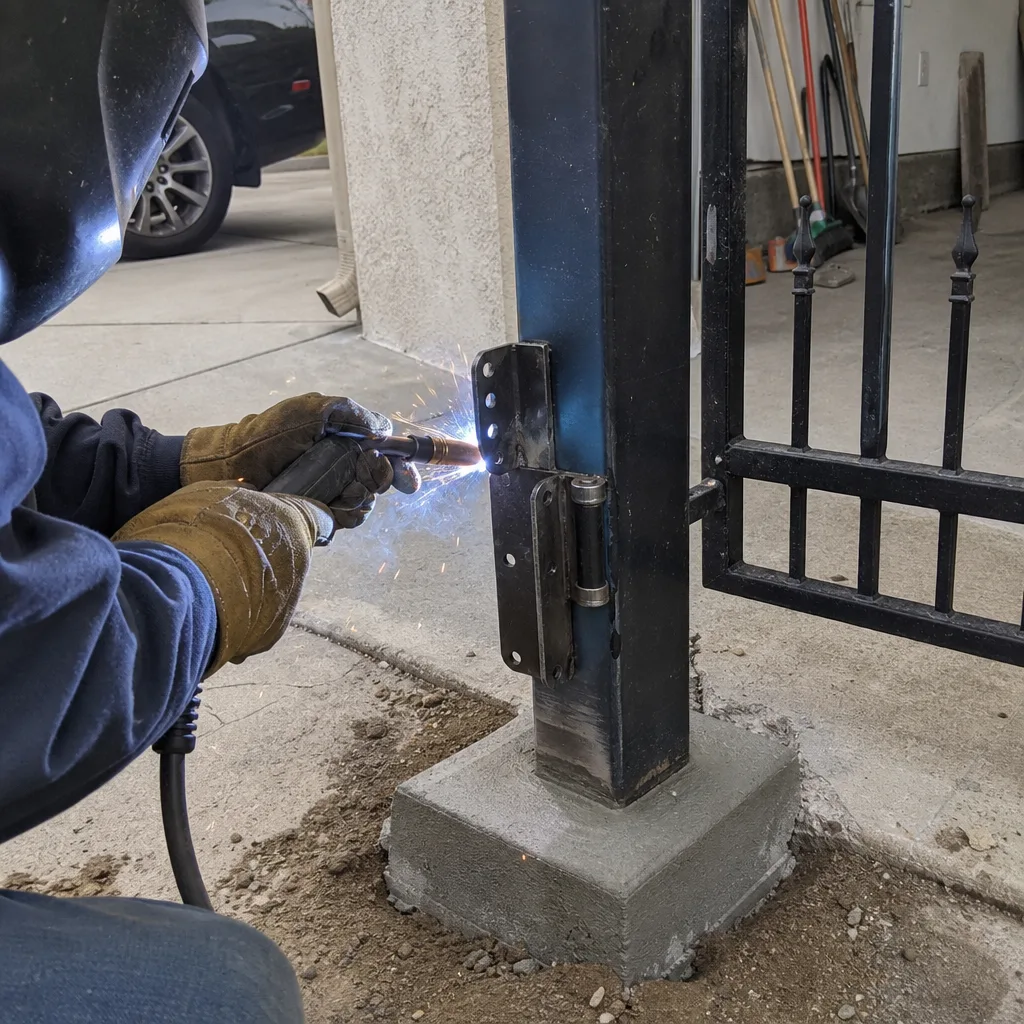
- Skipping the permit because the previous owner skipped it. The unpermitted status transfers to you at closing. You inherit the code violation, the safety liability, and the future title flag. Legalizing it before selling is far cheaper than negotiating it during escrow.
- Assuming an HOA approval is the same as a city permit. It isn’t. An HOA can approve your gate style, but only the city permit and inspection establish code compliance. Missing the city permit leaves you exposed even with full HOA sign-off.
- Maxing out the force setting on the operator. We see this constantly. A previous owner sets the force to maximum to keep a misaligned gate moving, and now the operator won’t reverse for anything. That’s a UL 325 entrapment hazard and an automatic inspection failure.
- Forgetting the warning sign. The sign is the cheapest compliance item on the list, and inspectors check for it every time. A $30 sign can be the only reason a permit fails.
- Running exposed or spliced wiring without conduit. Burbank inspectors flag unprotected low-voltage wire runs and open splices specifically. Weatherproof junction boxes and sealed conduit are required, not optional.
- Buying an operator online and having a handyman install it without a permit. The operator may be UL 325 listed, but the installation is not compliant just because the product is. Without the permit and inspection, you own an undocumented electrical installation.
- Ignoring gate travel limits. When a gate over-travels past its stop points, it stresses the operator, the hinges, and the mount. The inspector watches full travel during the inspection, and a gate that slams or drifts past the stops fails.
When to Call a Professional
Call a professional if your gate operator was installed without a permit and you’re planning to sell, if the gate doesn’t reverse when it hits resistance, if a photo-eye is missing or misaligned, if you’re automating a manual gate for the first time, or if an HOA has flagged your gate and you need documentation in order. Call if you see exposed wiring, if the operator force feels too strong to stop with your hand, or if an inspector has already issued a correction. These situations carry either safety risk or title risk, and both are cheaper to fix now than to negotiate later. For a full assessment of any gate issue in the Burbank area, Vance Gate Repair Burbank offers free written estimates, and a live person answers the phone at (213) 577-1120 twenty-four hours a day.
Frequently Asked Questions
No, simple mechanical repairs like hinge replacement, welding, post straightening, and wheel replacement do not require a permit in Burbank. The permit requirement starts when an automated operator is installed, replaced, or added to a previously manual gate. Call us at (213) 577-1120 if you’re not sure which side of the line your work falls on, and we’ll tell you before anyone picks up a tool.
Yes, an unpermitted gate operator can surface during a title search or buyer inspection and become a negotiating point. The buyer often requests a credit or demands the seller legalize the installation before closing. Remediation and a retroactive permit typically cost $600 to $1,500, which is less than the $2,000 to $5,000 credit a prepared buyer might request.
The inspector checks UL 325 entrapment protection, force settings, warning signage, electrical wiring, operator mounting, and full gate travel. If anything fails, you receive a correction list and schedule a re-inspection. Call (213) 577-1120 for a free evaluation of whether your gate would pass today.
An HOA can require its own architectural review and gate approval, but it cannot waive a city permit or exempt you from UL 325 compliance. Where HOA rules and municipal code overlap, the stricter requirement governs. You need both the HOA approval and the city permit, in that order.
UL 325 is the safety standard for automated gate operators, covering entrapment protection, force limits, and warning signage. Every permitted gate operator installation in California must meet UL 325. If you’d like a free assessment of your operator’s compliance, call us at (213) 577-1120 and we’ll walk you through what we look at.
The permit fee for a residential gate operator in Burbank typically runs $150 to $350, with retroactive permits costing roughly double. The full cost of pulling the permit, completing the work, and passing inspection depends on your operator and wiring condition. Call (213) 577-1120 for an exact written quote; estimates are free.
Yes, we handle the permit application and schedule the inspections as part of the job scope. The permit fee, the inspection, and the compliance work all appear on your written scope before any work starts, which is the definition of our upfront pricing policy.
The Bottom Line
California gate permitting comes down to one line: mechanical repairs are exempt, automated operators are not. In Burbank, a gate operator installation or replacement requires a low-voltage electrical permit and a UL 325 compliance inspection, and the inspector checks entrapment protection, force settings, signage, wiring, and gate travel. An unpermitted operator is a liability you already own, whether you installed it or a previous owner did. Document it, assess it, fix it, and legalize it before you sell. The paperwork costs less than the escrow negotiation. When you need the assessment, a written quote, or the full permitted installation done right, call Vance Gate Repair Burbank at (213) 577-1120. For more guides & resources, visit our blog. A live person answers, the price is written before work starts, and every visit leaves a documented photo record.
Written by Adrian Vance, Owner at Vance Gate Repair Burbank, serving Burbank since 2014.