
Last updated September 20, 2026
Free on-site gate assessment - hinges, posts, and your LiftMaster or Nice gate operator checked before anything is quoted
The assessment is free and the quote is the invoice.

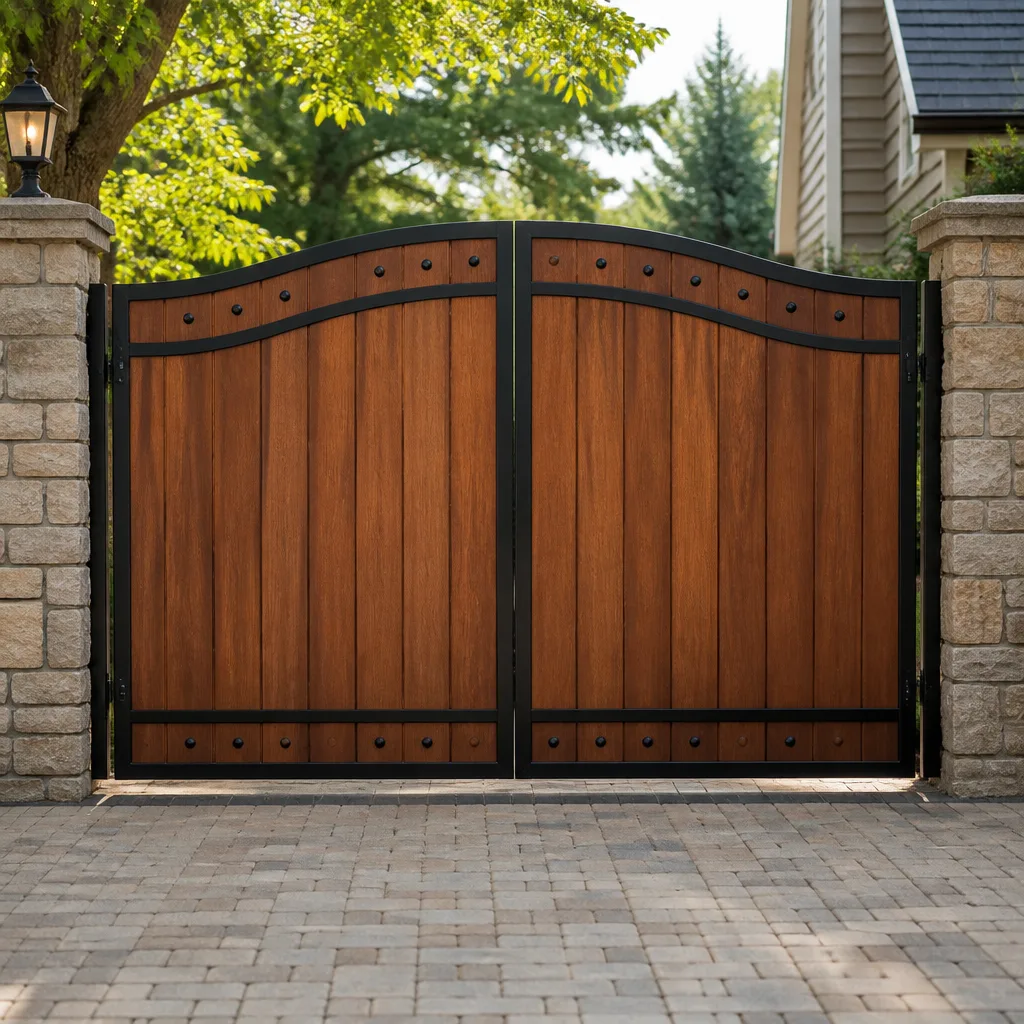

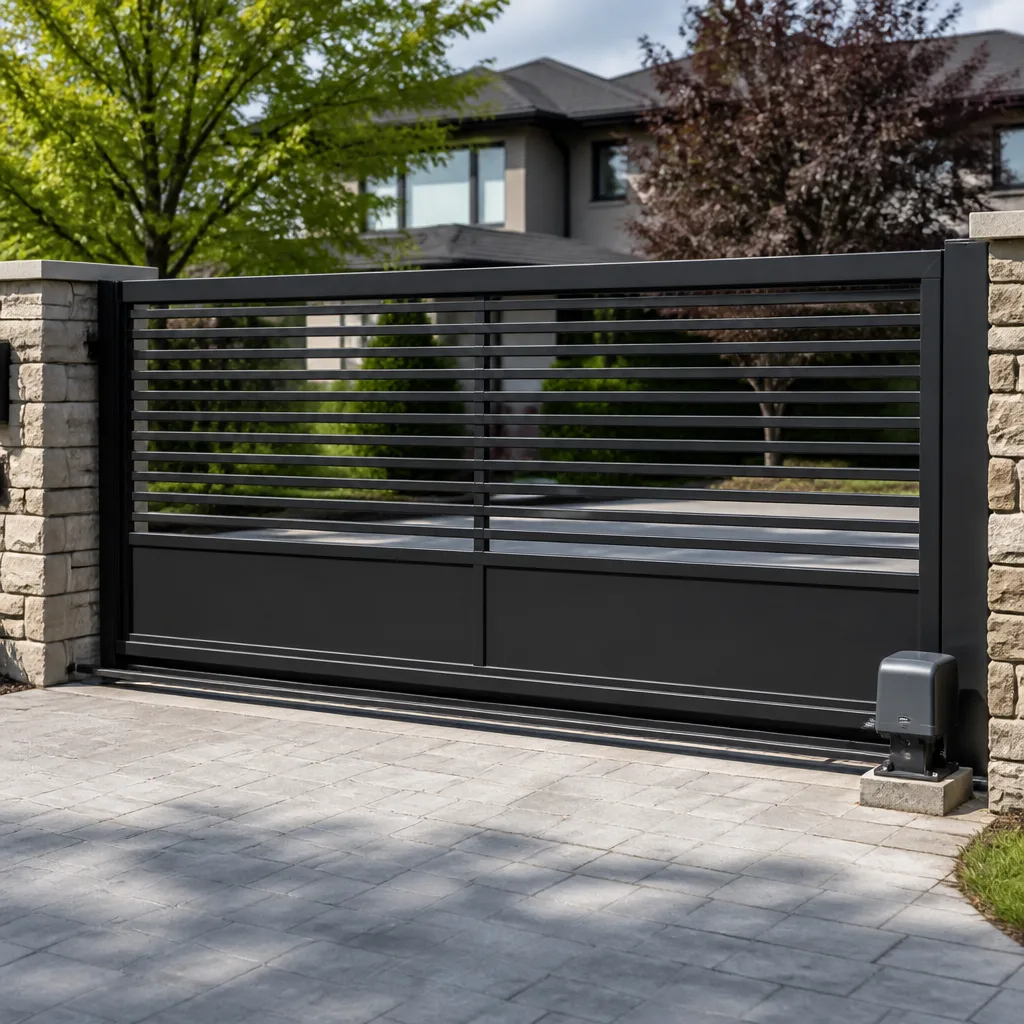
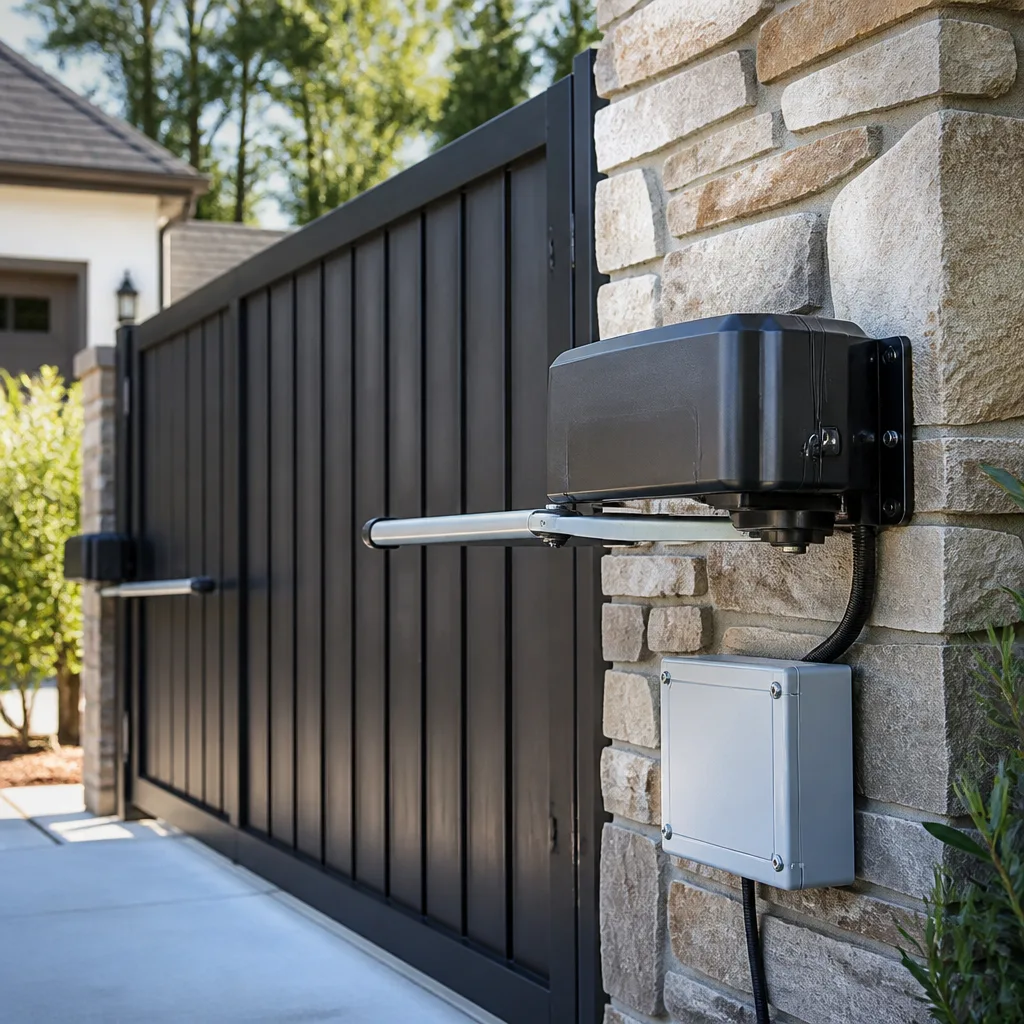
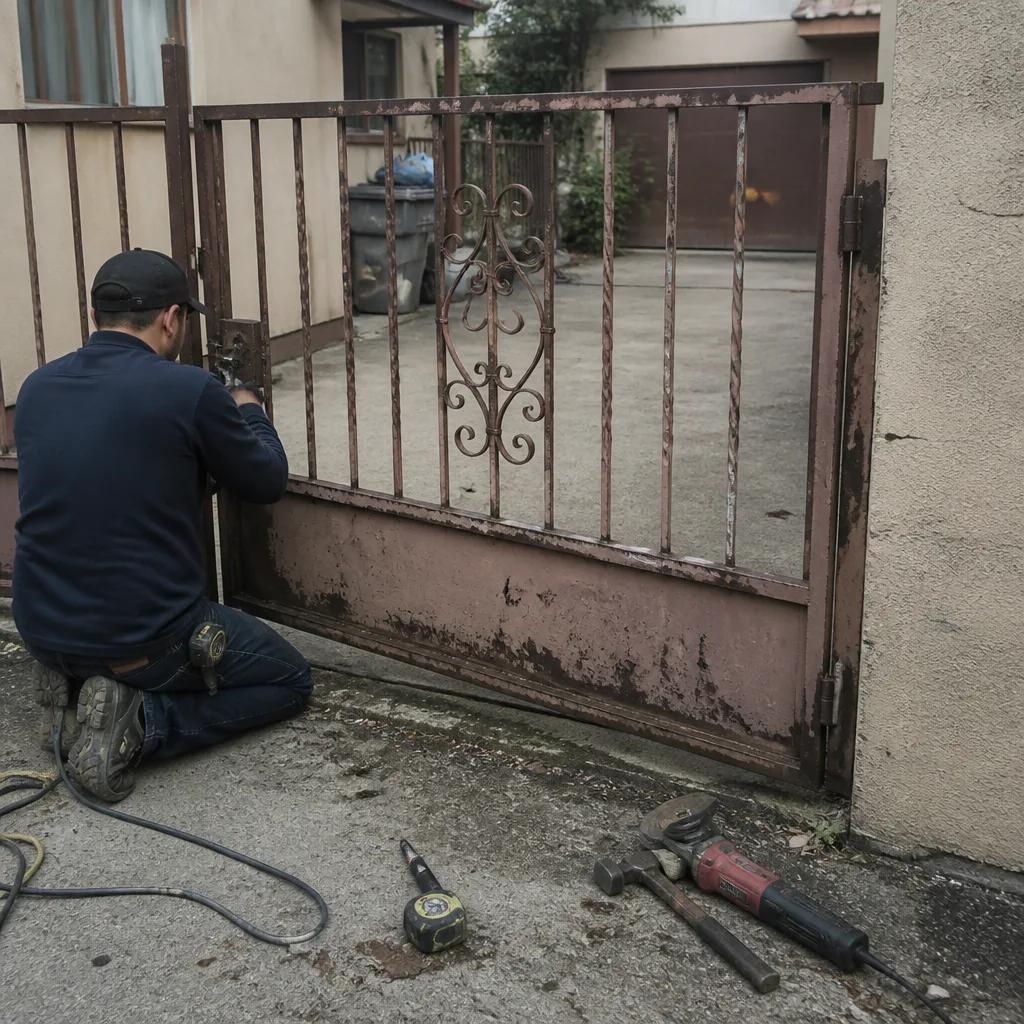 Before
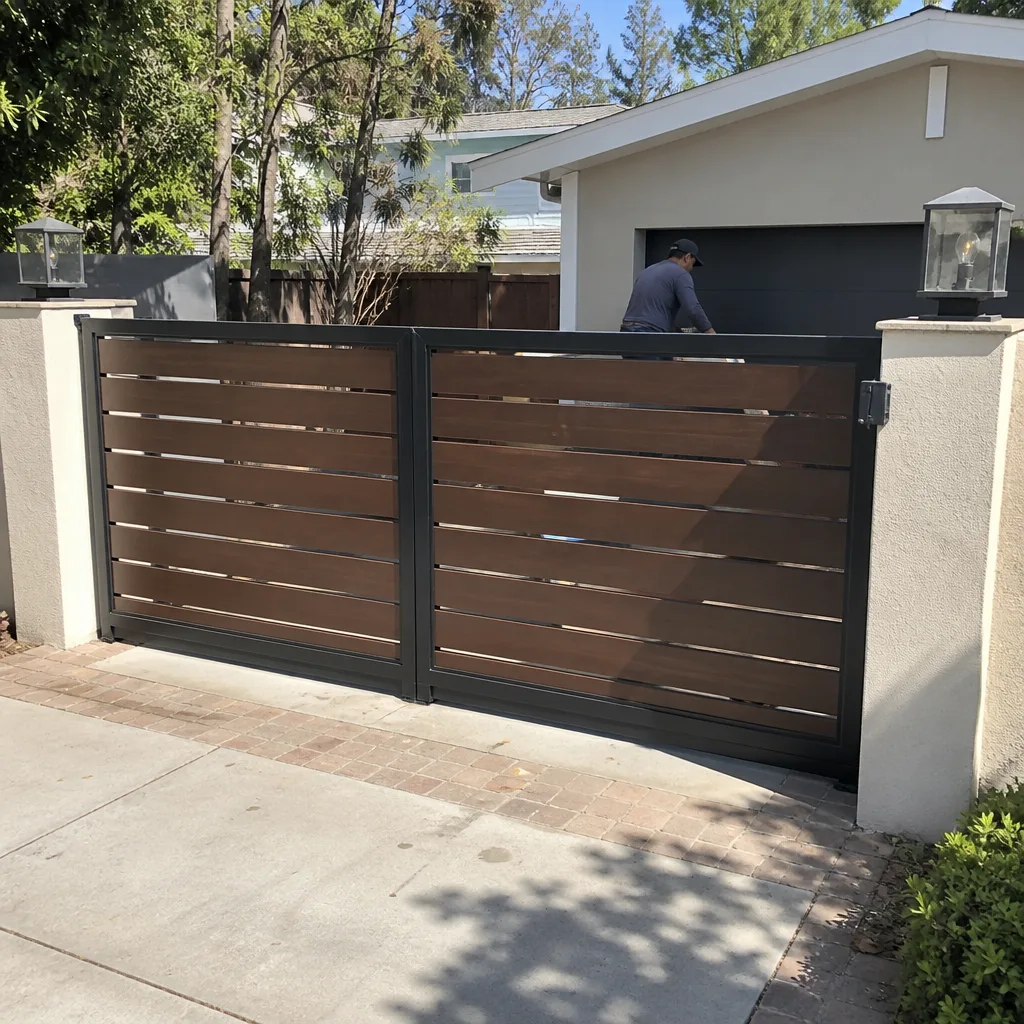 After
After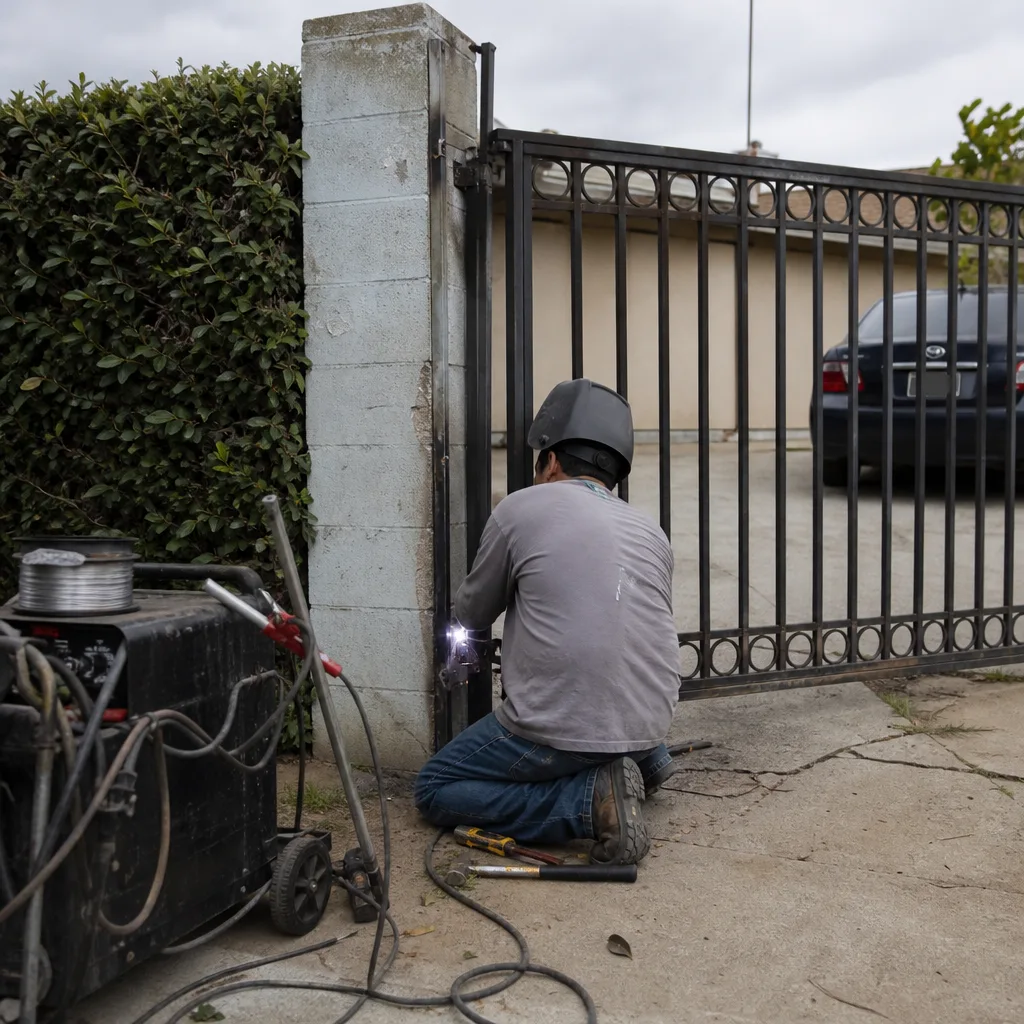 Before
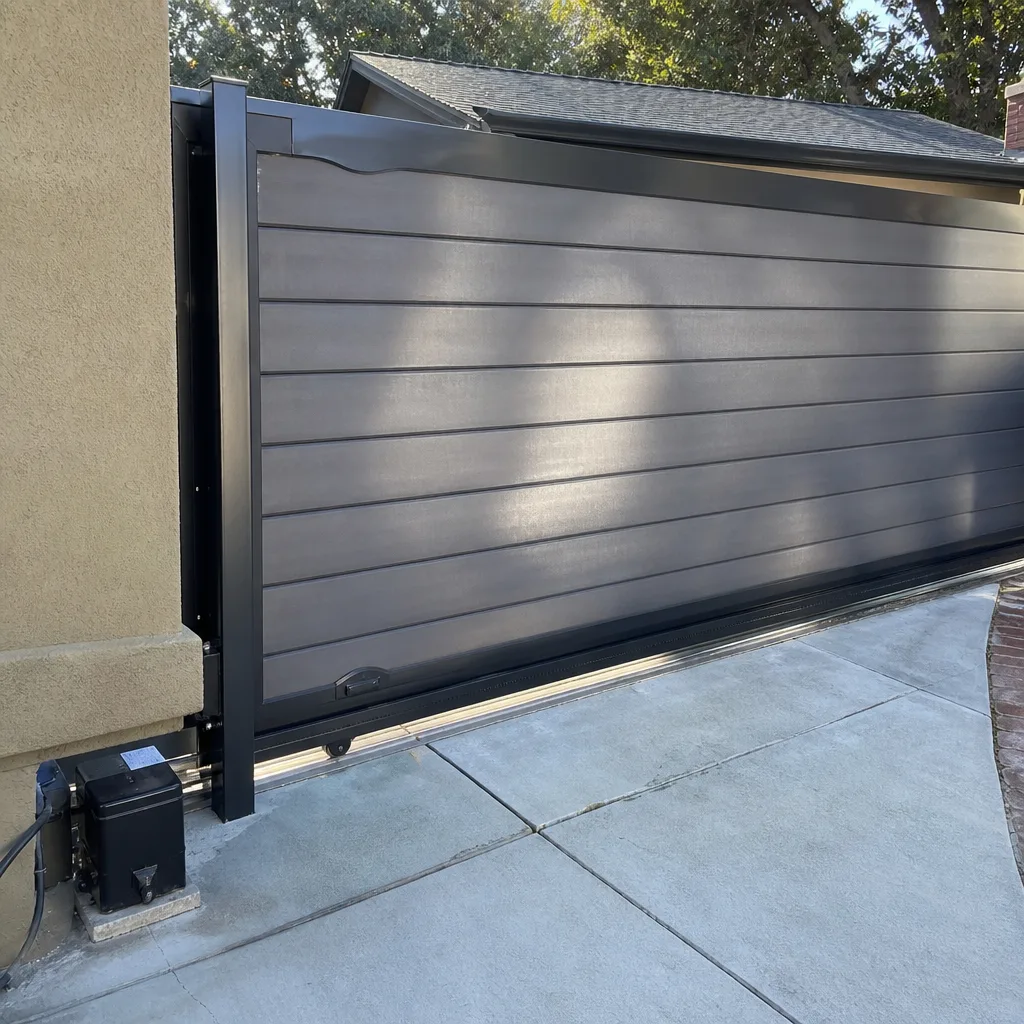 After
After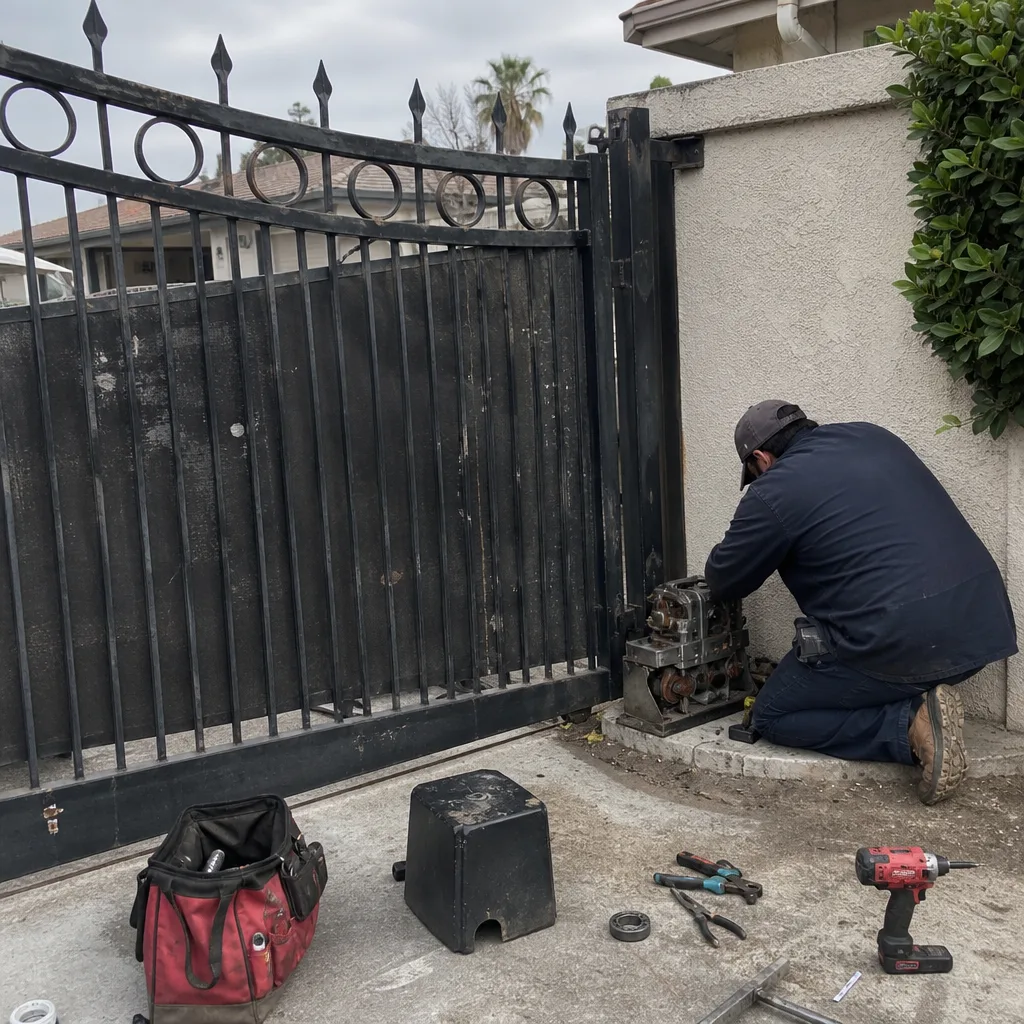 Before
 After
AfterGate Repair Warning Signs: A Burbank Homeowner’s Reference Guide
Most gate failures are readable two to four weeks before they happen, but homeowners in Burbank don’t know which observations are diagnostic because no one has translated technician findings into plain language. We’ve watched thousands of gates announce their own breakdowns with small, consistent behaviors: a hesitation, a hum, a scrape against the post. This reference matches observable symptoms to their specific causes, so you can tell the difference between a gate that needs a minor tune-up and a gate that will lock you out on a Tuesday morning. By the time you finish reading, you’ll know what to watch, what it means, and how to describe it precisely enough that a technician arrives at your Burbank driveway with the right parts on the first visit.
Quick Answer
Most Burbank gate repairs are avoidable if you recognize the warning signs early: hesitation before movement, grinding or scraping sounds, a gate that stops mid-cycle and reverses, keypad or remote buttons that require multiple presses, or visible sagging and post lean. These symptoms map directly to specific components: start capacitors, hinge bearings, limit switches, receiver sensitivity, and foundation soil shift. Call a Gate Repair services specialist when these signs persist for more than a few days, because the window between “noticeable” and “not working at all” is usually measured in weeks.
Table of Contents
- Symptom-to-Cause Reference Table: What You See, What It Means, What Confirms It
- Scheduled Repair vs. Imminent Lock-Out: How to Tell the Difference
- How to Describe a Gate Symptom Precisely on the Phone
- Burbank-Specific Warning Signs: Mineral Deposits, Heat, and Soil Shift
- What to Document Before Any Technician Arrives
- Component Wear Timeline: What Fails First and When
- What You Can Safely Check Yourself (and What You Should Not)
- Common Mistakes to Avoid
- When to Call a Professional
- Frequently Asked Questions
- The Bottom Line
BeforeAfterSymptom-to-Cause Reference Table: What You See, What It Means, What Confirms It
Every gate symptom is a message from a specific component. Here is the translation key, built from what we document on service calls across Burbank, from Magnolia Park to the Hillside District.
- Symptom: Gate hesitates two to five seconds before moving after the remote or keypad beeps.
Likely cause: Start capacitor reading below 70% of rated microfarads. The capacitor is the kick that gets the motor spinning.
Confirmed by: A multi-meter capacitance test showing microfarad value under spec. This is not a “needs adjustment” situation. It is an electrical component failing on a measurable curve. - Symptom: Grinding or metal-on-metal scraping during travel, worse in the first few feet.
Likely cause: Worn hinge bearings or a drive rail that has lost alignment due to post shift.
Confirmed by: Visible play in the hinge pin, measured with the gate under load, or a level reading on the rail showing more than a few degrees of deviation. - Symptom: Gate stops mid-cycle and reverses, or opens a few feet and stops.
Likely cause: Limit switch fault or obstruction-sensor interference, often from a photo-eye that has accumulated mineral haze on the lens.
Confirmed by: Reading the limit switch position against travel, or a volt-meter reading at the photo-eye showing intermittent signal drop. - Symptom: Remote works from 10 feet away but not from the street.
Likely cause: Receiver sensitivity loss from heat-related antenna drift, a failing remote battery transmitting at reduced power, or LED interference on the 433 MHz band.
Confirmed by: Signal strength test at measured distances, or a receiver sensitivity re-calibration that restores range immediately. - Symptom: Keypad requires three or more presses before the gate responds.
Likely cause: Keypad membrane wear or receiver delay from low-voltage supply at the keypad.
Confirmed by: Voltage reading at the keypad terminal, typically below 12V when the keypad is pressed, indicating wiring or transformer degradation. - Symptom: Visible sag on the gate leaf, with a widened gap at the top hinge side.
Likely cause: Hinge bushing wear, especially on heavier solid-iron gates common in Burbank’s older home styles.
Confirmed by: Lift test at the latch edge measuring vertical play, or visible bushing material loss at the hinge barrel. - Symptom: Gate slams hard at the end of travel instead of slowing.
Likely cause: Soft-stop feature not configured, or ramping lost after a power outage reset the board defaults.
Confirmed by: Board parameter audit showing soft-stop disabled or set to zero.
This table matters because it changes the conversation from “it’s acting weird” to “the start capacitor measured below 70% of rated microfarads.” The second statement gets the right part on the truck. The first statement gets a technician who has to diagnose everything on site. At Vance Gate Repair Burbank, we price the repair based on the confirmed cause, not the symptom description.
For a deeper look at the repair process itself, see Gate Repair in Burbank.
Scheduled Repair vs. Imminent Lock-Out: How to Tell the Difference
Not every warning sign is an emergency. Some allow you to schedule a repair at normal rates with full parts availability. Others mean your gate could stop working entirely within days, and you should treat the call as urgent. The distinction is not about how loud the symptom is. It is about which component is failing and whether that component is still able to perform its function under load.
Signs You Can Schedule (Still Working, Degrading Slowly)
- Remote range is shorter than it used to be, but the gate still opens reliably from the driveway
- A light scrape or squeak during travel that hasn’t changed pitch in over a week
- Keypad takes two presses, but works consistently on the second press
- Gate moves slightly slower than when it was installed, with no stops or reversals
- Minor sag that has stabilized, with no visible change in hinge alignment
These are wear patterns. They are measurable, they are fixable, and they do not typically cascade into complete failure within a short window. Scheduling within a week or two is reasonable.
Signs of Imminent Lock-Out (Will Fail Within Days to Weeks)
- Gate hesitates before moving on every single cycle. The start capacitor is failing on a measurable curve. In our experience in Burbank, once hesitation appears, the capacitor typically fails completely within two to four weeks.
- Gate stops mid-cycle and reverses more than once per day. The limit switch or sensor is sending false obstruction readings. If it is the limit switch, the board cannot reliably complete a cycle, and the gate will eventually refuse to move at all.
- Grinding that has gotten noticeably louder over a few days. A bearing that has lost its bushing material is now wearing the hinge pin itself. When the pin seizes, the gate stops moving entirely, and the repair cost jumps from a bearing replacement to a hinge rebuild.
- Any electrical smell, visible scorching at the board, or a breaker that trips when the gate is used. This is not a warning sign. This is an active fault. Stop using the gate, disconnect power if you can do so safely, and call immediately.
- Post lean that is visibly changing. If you can see the gate getting closer to the ground or the gap between gate and post widening week over week, the foundation is shifting, and the gate’s weight is now working against the motor. When the post moves far enough, the gate can bind against the ground, stall, and burn out the motor.
The line between these two lists is whether the component can still do its job. A slow gate is still moving. A hesitating gate is one failed start away from not moving. That is the distinction we use when a Burbank homeowner calls and asks whether they can wait a week.
How to Describe a Gate Symptom Precisely on the Phone
When you call a gate repair company in Burbank, the quality of your symptom description determines whether the technician arrives with the right parts. For help choosing who to call, see our guide on How to Hire a Gate Repair Contractor in Burbank: A Step-by-Step Guide. Here is how to describe a problem so precisely that the diagnostic work starts before the truck rolls.
- Name the behavior, not your interpretation. Do not say “it needs adjustment.” Say “the gate opens about 18 inches, stops for three seconds, then reverses.” The behavior is observable and replicable. Your interpretation is a guess.
- State when it happens. “Every time, first thing in the morning, only after a rain, only when it’s above 90 degrees.” Timing is diagnostic. A gate that binds only after rain points to soil movement, not a motor fault. A gate that fails only in Burbank’s summer heat points to receiver sensitivity or thermal overload on an undersized motor.
- Give the distance, duration, or count. “Remote works from 10 feet but not 30.” “Gate hesitates four seconds before moving.” “Keypad takes four presses.” Numbers are what technicians use to narrow down the component. “From 10 feet but not 30” says the receiver is still functioning, but the signal path or antenna is degraded. “Takes four presses” says the keypad membrane or wiring is failing, not the receiver.
- Mention the make and model of the motor or keypad if you know it. A Viking gate opener has different common failure points than a Linear or a DoorKing. Saying “Viking, I think, with a photo-eye on the ground on each side” gives the technician a head start on parts selection.
- Note the sound. Grinding, scraping, humming, clicking, or silence. Each sound maps to a different component. A hum with no movement at all is usually the start capacitor failing to spin the motor. A loud bang at the end of travel is a mechanical stop. A click repeated every few seconds is a relay hunting for a signal it isn’t getting.
- Report the error code or blinking pattern. Most gate control boards have diagnostic LED sequences or keypad error codes. If you can see a blinking light pattern, count the blinks and report the sequence. That alone can identify the fault before a single tool is opened.
Here is a template phone description that contains everything a technician needs: “My gate opens about two feet, stops, reverses, and the entire cycle takes maybe four seconds. It happens every time, morning and evening. The remote works fine from the driveway, but not from the street. It’s a DoorKing with a photo-eye on each side of the track. There’s a clicking sound for about a second before it moves.” That description immediately tells us where to look.
We repair motors from DoorKing, Linear, Viking, Ghost Controls, and five other major brands, so the make and model you report gets matched to known failure patterns. The goal is to arrive at your Burbank property with the diagnostic process already half done.
Burbank-Specific Warning Signs: Mineral Deposits, Heat, and Soil Shift
Burbank gates fail in ways that are specific to this climate and topography. A gate in Burbank is exposed to conditions a technician in a coastal city rarely sees, and those conditions create warning signs homeowners miss because the signs don’t match the generic “gate repair” advice found online.
Mineral-Deposit Buildup on Photo-Eyes
Burbank’s irrigation water is hard. When sprinklers spray near a gate path, the mist carries dissolved minerals that dry on the photo-eye lens as a white or hazy film. The photo-eye, the infrared beam that stops the gate if something crosses the path, is a safety component. When its lens is obscured, the receiver cannot confirm the beam, and the logic board reads that as an obstruction. The gate stops and reverses. Homeowners in Burbank clean the lens once, see it hazy again in a month, and assume the sensor is faulty. It isn’t. It’s the mineral content of the water. The fix is not usually a new photo-eye. It is cleaning the lens, repositioning the sprinkler head, and, in some cases, applying a lens sealant that reduces mineral adhesion. We document every photo-eye position and lens condition in the photo record we leave with each homeowner.
Heat-Related Receiver Sensitivity Loss
Burbank summer temperatures regularly cross 100 degrees. Gate receivers mounted inside metal enclosures absorb that heat, and when the enclosure temperature climbs, receiver sensitivity drops. The symptom is seasonal: remote range collapses in July and August, then mysteriously recovers in November. Homeowners often replace remote batteries, then the remote itself, then call a technician in frustration. In our experience, this pattern is often resolved by re-calibrating receiver sensitivity and, in some cases, adding a ventilated enclosure or relocating the antenna. For our full maintenance schedule, see Seasonal Gate Repair Care for Burbank: Year-Round Homeowner’s Guide. The warning sign to watch is a range drop that tracks with the thermometer, not with battery age.
Post Movement from Soil Shift
Burbank is built on alluvial soil with a high clay content in several areas, particularly below the Verdugo foothills. Clay expands when wet and contracts when dry. Over years, the expansion and contraction cycle can move a gate post enough to change the gate’s geometry. The warning signs are subtle: the gate scrapes the ground only in winter, or the latch no longer lines up with the strike in summer, or a gap opens between the post and the concrete footing. These are not hinge problems. They are foundation problems manifesting at the gate. The fix is often re-setting the post with proper footing or adjusting the hinge offset, but the underlying soil movement does not stop. The documented photo record we leave after every visit becomes the baseline you can compare against next year to tell whether the post is still moving or has stabilized.
Each of these three conditions is common enough in Burbank that we mention them specifically when homeowners call with a “sometimes” symptom. “Sometimes it doesn’t open” plus “I have sprinklers near the gate” points to mineral haze. “Sometimes it doesn’t respond in summer” points to heat-related sensitivity. “Sometimes it scrapes” plus “in winter” points to soil movement. The pattern is the diagnosis.
For gate motors and openers that need service, see Gate Motor & Opener in Burbank.
What to Document Before Any Technician Arrives
You don’t need to be a technician to gather useful evidence. A homeowner who documents the symptom before calling a gate repair company in Burbank saves time and reduces the chance that a problem is “not reproducible” when the technician is on site. Gates are notorious for working perfectly the moment someone is watching. Here is what to capture.
- Video of the behavior. Film the gate running through a full open-close cycle, holding your phone still and capturing the entire gate, including the top hinge, the bottom gap, and where the gate meets the post. Include the sound. A 30-second vertical video recorded from six feet back is enough for a technician to see hesitation, sag, or irregular travel speed. Do it on a normal day, not during a rain event, unless the symptom only appears during rain, in which case film it while it’s raining.
- A clear photo of the control board. Open the control box and photograph the board without touching anything. The photo should show the make and model printed on the board, any visible scorch marks, and the position of the LED lights. If you’re not comfortable opening the control box, photograph the motor label and any external brand markings you can see from the outside.
- A keypad error-code reading. If your keypad displays a numeric code or a blinking pattern, photograph it or write down the sequence. Ghost Controls, Viking, and DoorKing keypads display different codes for different faults. The code is often the single fastest route to identifying the failed component. Even if the code is no longer displayed when the technician arrives, your photo of it is evidence.
- A photo of the gate’s clearance gap. Photograph the space between the bottom of the gate and the ground, and the space between the gate edge and the post. If the gap is uneven, that is useful diagnostic information about sag or post movement. Take the photo from the driveway side, showing the full gate width.
- A video of the remote behavior from two distances. Film one attempt from 10 feet away and one from the street. This documents receiver range loss far better than a verbal description. Same for the keypad: film a normal button press sequence and count how many presses it takes to trigger the gate.
- A written note of when the symptom started. “Started around the second week of July” or “first noticed after the heavy rain in January” is useful. Gate failures often correlate with weather events, power outages, or recent construction nearby. The timeline is diagnostic.
Every Vance Gate Repair Burbank visit includes a documented photo record of what we find, what we adjust, and what we replace, left with you and filed in your job record. The Haven Standard, our operating rule set, requires that evidence on every job. Your documentation before the visit gives us the starting point. Ours gives you the record you keep after we leave.
Component Wear Timeline: What Fails First and When
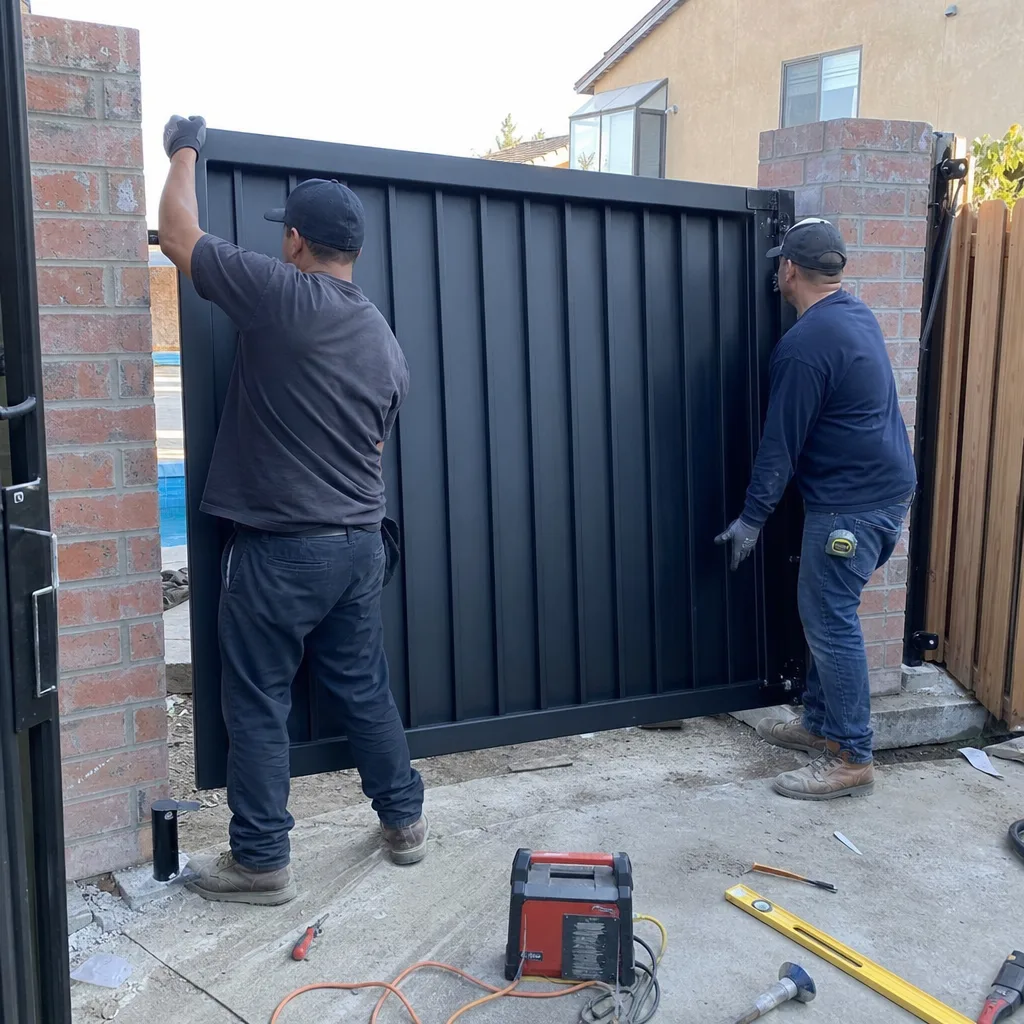
Gates don’t fail randomly. Components wear on predictable schedules, and knowing the schedule tells you which warning signs to watch at which age of your gate. Here is the timeline we see across Burbank residential installations, adjusted for local heat and soil conditions.
Years 0-3: The Infant Window
Most failures in this window are installation-related. A photo-eye misaligned by two inches. A limit switch set slightly past travel. A gate that intermittently refuses to close because the safety loop wasn’t properly connected. These failures are correction jobs, not wear jobs, which is why a documented installation record matters. When we install a gate in Burbank, the homeowner receives wiring diagrams, limit-switch readings, and photos of every setting. If a problem appears in year one, the record tells us exactly what was set and where.
Years 3-7: The Electrical Wear Window
This is when start capacitors, receiver circuits, and keypad membranes begin to fail. The symptoms cluster around hesitation, range loss, and intermittent non-response. The capacitor is the most common failure in this window. Our documentation habit catches these before they cascade: a capacitor measured at 64% of rated capacitance in March is a scheduled repair. The same capacitor ignored until August is a Tuesday-morning lockout.
Years 7-12: The Mechanical Wear Window
Hinge bearings, bushings, and drive rails now show measurable wear. The gate sags, scrapes, or grinds. In Burbank, gates in the heavier solid-iron style common to older Magnolia Park homes wear hinges faster than aluminum gates. The fix is often a bushing replacement and re-alignment, but if the post has been moving with soil shift, the work is more involved. The earlier the sag is caught, the cheaper the repair.
Years 12+: The System Decision Window
By this point, the motor, board, and mechanical components have all seen significant service. The decision is whether repair remains cost-effective or whether a new gate installation is the better long-term spend. The answer depends on the specific components, which is why we provide a written scope and price for both options and let the homeowner decide. No pressure, no steering. The price is in writing before any work starts, every time.
If you’re weighing repair against replacement, Gate Installation in Burbank covers what a full installation includes.
What You Can Safely Check Yourself (and What You Should Not)
Some checks are safe for a homeowner. Others are genuinely dangerous, and we will tell you plainly which is which. No gate repair article should encourage you to put your hands near high-tension springs or energized terminals without specific training.
Safe to Check Yourself
- Photo-eye lens condition. Look at the lens. If it’s hazy or filmed, clean it with a soft cloth and plain water. If that restores function, the problem was mineral buildup, and you now know to watch for it. Document the cleaning and the result.
- Keypad button response. Press each button and note whether the keypad beeps on every press or misses some. If it beeps consistently but the gate still doesn’t move, the keypad is likely fine, and the fault is elsewhere.
- Gate alignment as a visual check. Stand on the driveway side and compare the gap at the top and bottom hinges. A tapered gap means the gate is sagging. You don’t need tools to see a difference of a quarter inch or more.
- Remote battery replacement. This is the one part replacement that is universally safe, as long as you note whether the new battery changes the behavior. If range doesn’t improve, the receiver is suspect, not the remote.
- Error-code reading from the keypad or board. Reading a code is passive observation. Write it down and report it.
Do Not Attempt Yourself
- Adjusting gate springs, tension rods, or counterbalance mechanisms. These components hold stored energy. A spring under tension can release with enough force to cause serious injury. If the gate is a swing gate with a tension spring, do not touch it. This is a trained-professional job, full stop.
- Opening the control box and probing terminals. The board carries live voltage. You can photograph the board with the box open, but do not touch any wiring or terminals. The photo is useful. The probing is dangerous.
- Re-aligning a photo-eye that is misaligned by more than a small amount. If the beam path requires moving the sensor housing, you risk setting it incorrectly and defeating the safety function. A photo-eye that is not properly aligned may fail to stop the gate when something is in the path. That is not a risk worth taking.
- Re-setting a tripped breaker more than once. If the gate keeps tripping the breaker, there is an electrical fault. Resetting the breaker repeatedly without finding the fault can damage the board or motor and poses a fire risk.
The rule is simple: you can observe, photograph, and report anything. You should not touch anything that stores energy or carries live current. When in doubt, leave it alone and call a professional.
Learn more about our approach to residential gate work at the Vance Gate Repair Burbank home page.
Common Mistakes to Avoid
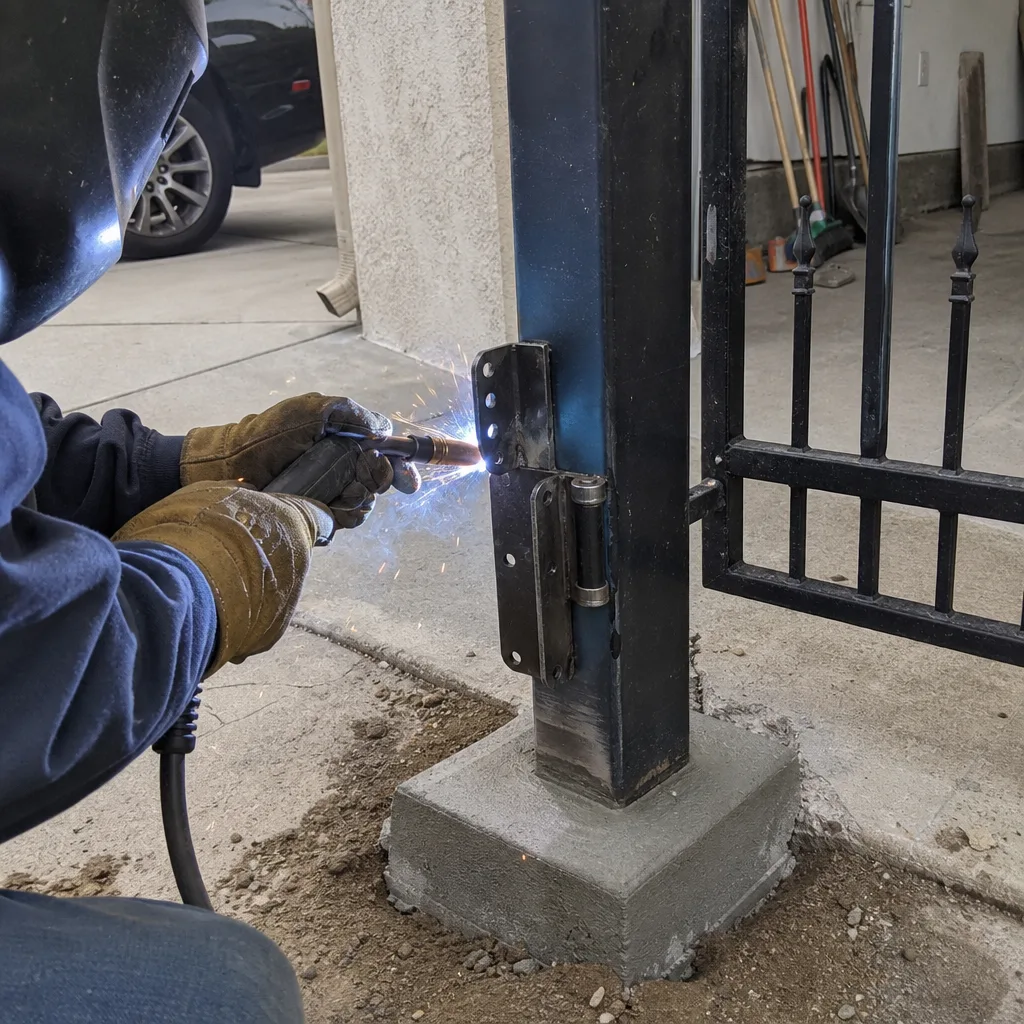
- Ignoring a hesitation because the gate still opens. A hesitating start is a failing start capacitor, and the capacitor will not get better. Every cycle draws the capacitor further from its rated value. In two to four weeks, the gate stops responding entirely. The hesitation is the cheapest moment to fix it.
- Replacing remote batteries and then the remote itself before testing receiver range. A gate that responds weakly from the street but fine from the driveway is a receiver problem, not a remote problem. Homeowners in Burbank spend money on new remotes every summer because the receiver sensitivity drops in the heat. Test range from measured distances before buying any replacement hardware.
- Lubricating a noisy gate without identifying the source of the noise. A spray lubricant can quiet a hinge temporarily, but if the noise comes from a failing bearing or a misaligned rail, the lubricant masks the warning sign while the wear continues. By the time the noise returns, the damage is usually worse.
- Propping the gate open when it stops moving and leaving it that way for weeks. A gate that will not close is also a security gap. A propped-open gate tells anyone watching that the property’s primary access control is currently defeated. Repair it quickly rather than making the problem visible to the street.
- Assuming a “sometimes” symptom isn’t real because the gate worked when the technician was there. The symptom is real. You just didn’t document it. The video of the behavior, the photo of the gap, the note of when it happens, those are the evidence that turns a “sometimes” into a “we found it.” Without them, the technician is diagnosing blind.
- Replacing a gate motor without checking the gate’s mechanical condition. In Burbank’s clay-heavy soil, a post that has shifted can put enough load on a new motor to shorten its life significantly. The motor is only as reliable as the geometry it moves. Check alignment and hinge condition before spending on a new opener.
When to Call a Professional
The moment a warning sign appears more than a few times in a week, the repair cost has probably already stopped being optional. A start capacitor that hesitates now is a lockout later. A gate that scrapes now is a hinge rebuild later. A photo-eye that hazes over now is a safety fault later. The earlier you call, the smaller and cheaper the repair, and the less likely you are to need emergency service at an inconvenient hour. If you have any gate symptom you can’t explain, document what you can and call us. Vance Gate Repair Burbank offers free estimates in Burbank. Call (213) 577-1120 and describe what you’re seeing. A live person answers, any hour. We’ll translate your description into a written price before any work begins, and you’ll get a documented photo record when we leave. That is The Haven Standard, and it applies to every gate we touch, in Burbank and beyond.
Frequently Asked Questions
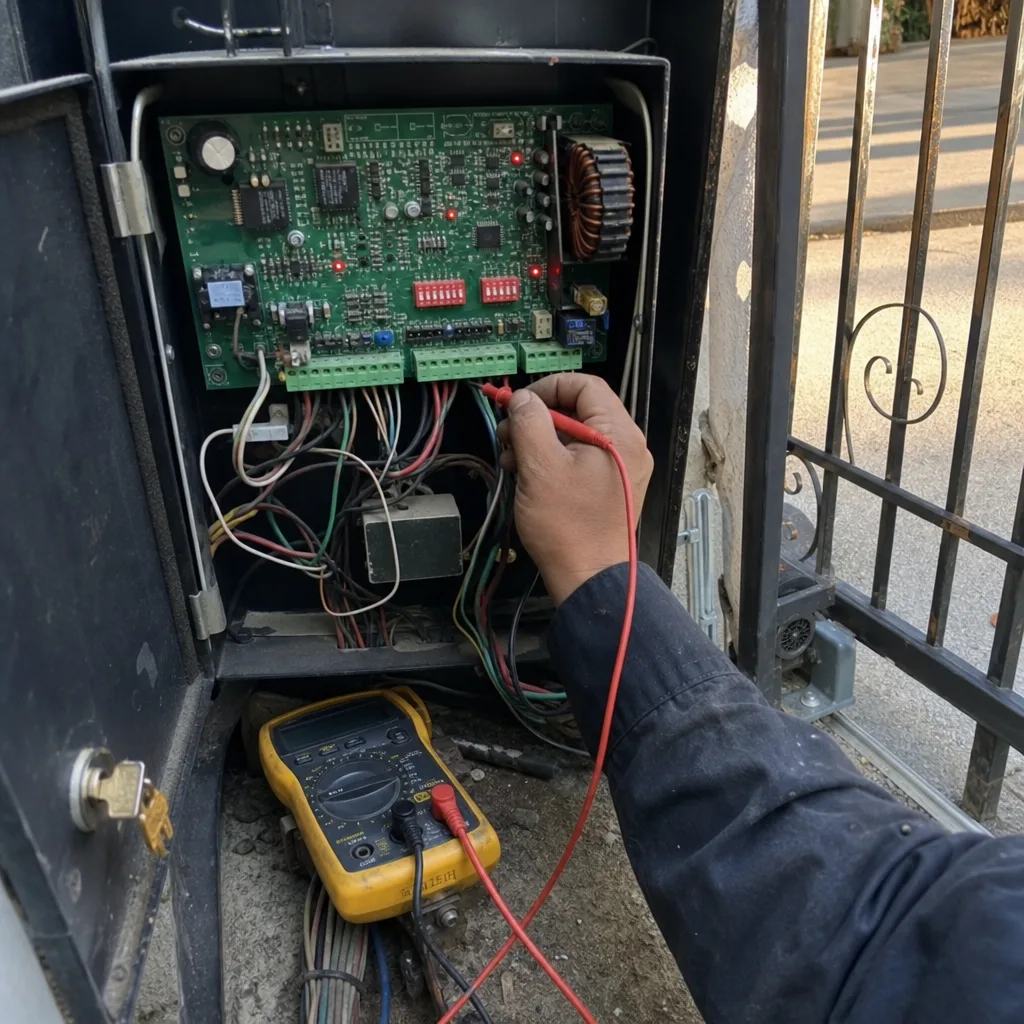
The most common warning sign we see in Burbank is a gate that hesitates before moving, which almost always traces to a start capacitor reading below 70% of its rated microfarads. The hesitation gets longer over weeks until the gate stops responding entirely. Call (213) 577-1120 if your gate hesitates on more than one cycle in a day; the fix is fast and inexpensive compared to the lockout that’s coming.
Gate repair pricing in Burbank depends on the failed component, not on a flat service rate. A photo-eye cleaning or alignment might be under $150. A start capacitor replacement typically runs between $180 and $340 depending on the motor brand. A hinge rebuild on a heavy iron gate can run from $400 to $900 depending on how long the wear has been progressing. The price is written and agreed before any work starts, so there’s no surprise invoice at the end. Call (213) 577-1120 for a free estimate with an exact number.
In many cases, yes. Common repairs like start capacitors, photo-eye alignment, and limit-switch resets are often completed same-day because we carry parts for Linear, Viking, DoorKing, Ghost Controls, and five other major brands on the truck. More involved repairs that require parts ordered to match a specific vintage board may take a day or two. Describe your symptom when you call, and we’ll tell you honestly whether same-day is realistic.
Heat reduces receiver sensitivity, especially in the metal control enclosures common in Burbank installations. When the enclosure temperature crosses roughly 100 degrees, some receivers lose enough sensitivity that the remote signal can’t be confirmed from normal distances. The fix is often a sensitivity re-calibration, a ventilated enclosure, or an antenna relocation, not a new remote or a new gate. Call (213) 577-1120 and describe your summer range loss; the fix is usually a same-day adjustment.
Write down the behavior (what the gate does, in order), when it happens (every time, only in heat, only after rain), the distance range on the remote, the number of keypad presses required, and any error code or blinking pattern on the keypad or board. A video of the behavior and a photo of the control board are even better. That documentation is what lets the technician arrive with the right parts on the first visit.
No. In Burbank, a sagging gate is often a post movement problem driven by clay soil expansion and contraction, not a hinge problem. The gate leaf itself may be perfectly fine, but the post has shifted enough to change the geometry. We measure the post position and document it in the photo record, so you can compare against baseline each year and know whether the movement is continuing or has settled. Call (213) 577-1120 for a free measurement if you suspect your post has moved.
The Bottom Line
A gate that fails without warning almost never failed without warning. The warning was there: a hesitation, a scrape, a range drop, a sag. You just didn’t have the translation. Now you do. The start capacitor that hesitates is measurable today and dead in weeks. The hinge that grinds is rebuildable today and seized in months. The photo-eye that hazes in Burbank hard water is cleanable today and a phantom obstruction tomorrow. Watch the symptoms. Document what you see. Call before the window closes. For more guides & resources, visit our blog. Vance Gate Repair Burbank gives you a written price before the work starts and a documented photo record when it’s done. That’s how gate repair should work, and it’s how we’ve done it since 2014.
Written by Adrian Vance, Owner at Vance Gate Repair Burbank, serving Burbank since 2014.